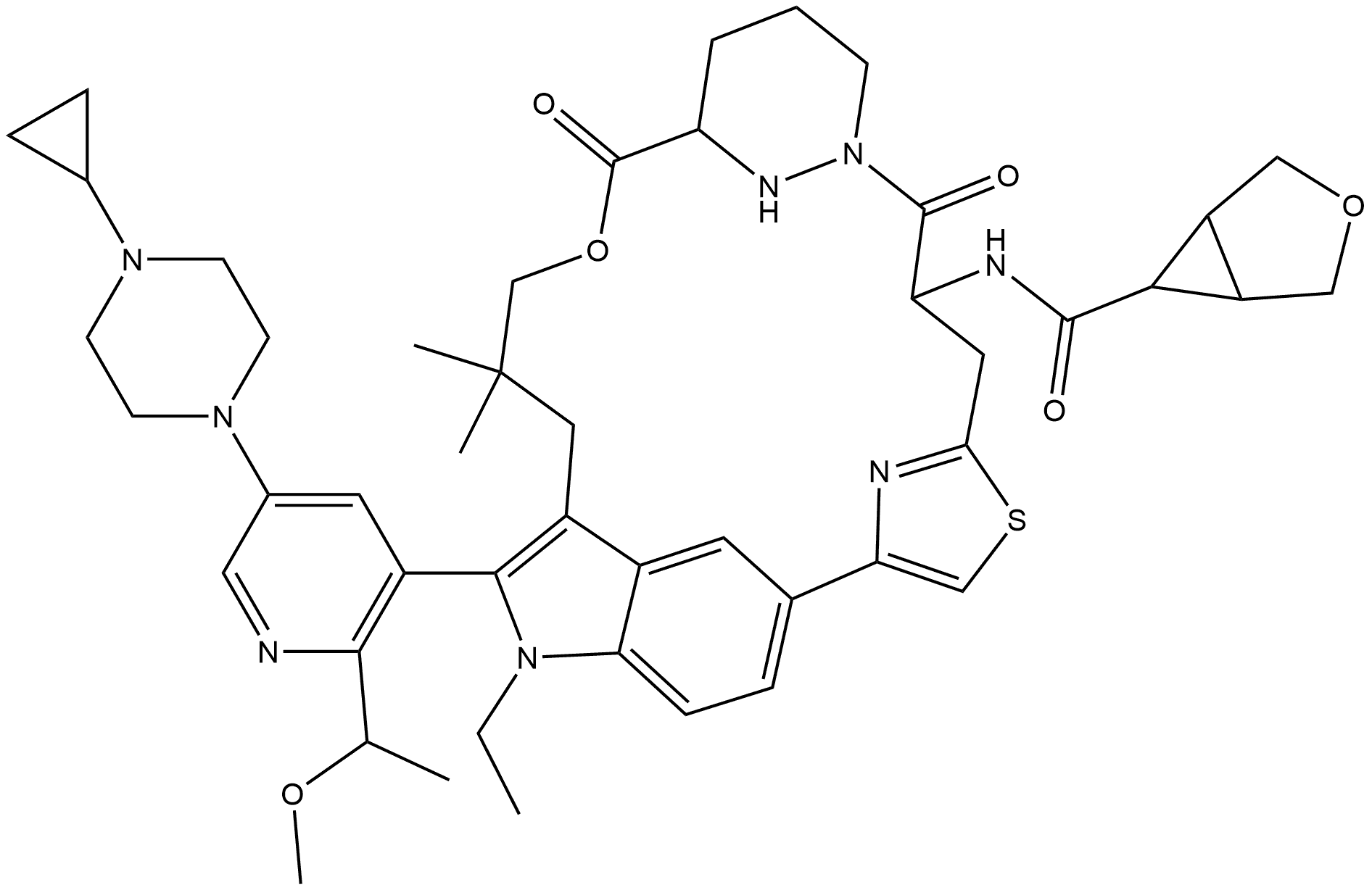
Compared to using RMC-4550 (HY-116009, a SHP2 inhibitor) and Coibmetinib (a MEK inhibitor) to inhibit RAS-MAPK downstream signaling pathway activity, directly targeting active RAS with RMC-7977 (10 mg/kg, p.o., once daily for 5 consecutive days per week followed by 2 days of cessation, for a total of 28 days) demonstrates superior anti-tumor activity in xenograft KRASG12X mouse models[1].
RMC-7977 (10 mg/kg, p.o., once daily for 5 days per week followed by 2 days off, for a total of 90 days) demonstrates significant anti-tumor activity in PDAC, CRC, and NSCLC models with KRASG12X mutations and in xenograft mice models, induces durable tumor regression, and shows good tolerability in the mouse models[1].
RAS inhibition mediated by RMC-7977 (10 mg/kg, oral administration, once daily for 28 days) does not impair immune cell function in immunocompetent mice[1].
RMC-7977 (10 mg/kg, p.o., once daily for 28 days) can inhibit the adaptive resistance to KRAS(G12C) inhibitors in a PDX mice model with KRAS(G12C) mutations (derived from NSCLC tumor cells that relapsed after Sotorasib (HY-114277) treatment)[1].
RMC-7977 (10-50 mg/kg, p.o., single dose) effectively inhibits RAS-MAPK signaling in human pancreatic ductal adenocarcinoma (PDAC) xenograft mouse models (Capan-1 (KRASG12V)) and maintains high concentrations in tumor tissue[3].
| Animal Model: | Subcutaneously implanted NCI-H441 CDX model of non-small cell lung cancer xenograft tumor (NSCLC) in BALB/c mice[1] |
| Dosage: | 10?mg/kg |
| Administration: | Oral gavage (p.o.), single dose or once daily for 5 days, followed by a 2-day break, totally for 28 days |
| Result: |
Had an EC50 value of 130 nM for DUSP6 in the NCI-H441 non-small cell lung cancer (NSCLC) model.
Was well tolerated and resulted in 83% mean tumour regression following 28 days of treatment in the NCI-H441 model.
Was sufficient to maximally suppress tumour DUSP6 levels (91%) at 8?h at a single oral dose.
Was observed to have prolonged exposure in tumors, with overall exposure in subcutaneous tumors increasing approximately threefold compared to blood. |
| Animal Model: | PDAC, CRC, NSCLC CDX and patient-derived xenograft (PDX) mice models (bearing KRASG12X mutations)[1] |
| Dosage: | 10?mg/kg |
| Administration: | Oral gavage (p.o.), once daily for 90 days |
| Result: | Caused tumor regression in 9 out of 15 (60%) RAS-addicted cancer mouse models after 4 to 6 weeks of administration.
Had minimal effects on body weight across all models.
Exhibited anti-tumor activity and maintained cytostatic responses after extending the administration to 90 days. |
| Animal Model: | Human Clinical-Derived Xenograft mice model of PDAC (Capan-1 (KRASG12V))[3] |
| Dosage: | 10, 25, 50 mg/kg |
| Administration: | Oral gavage, single dose |
| Result: | Was exposed in Capan-1 xenograft tumors for three times longer than in the blood.
Inhibited DUSP6 levels within 24-48 hours, with an EC50 of 142 nM. |