Uses
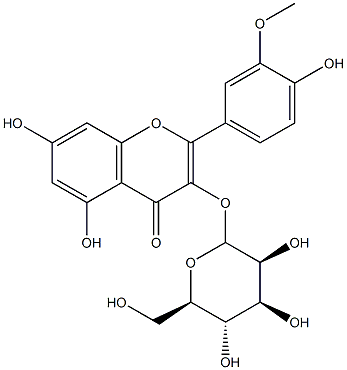
Isorhamnetin 3-O-galactoside (Cacticin), a flavonoid glycoside isolated from Artemisia capillaris Thunberg, which ameliorates CCl4-induced hepatic damage by enhancing the anti-oxidative defense system and reducing the inflammatory signaling pathways. Isorhamnetin 3-O-galactoside (Cacticin) has antithrombotic and anti-inflammatory activities[1][2][3].
Definition
ChEBI: Isorhamnetin 3-O-beta-D-galactopyranoside is a glycosyloxyflavone that is isorhamnetin substituted at position 3 by a beta-D-galactosyl residue. It has a role as a metabolite. It is a beta-D-galactoside, a monosaccharide derivative, a glycosyloxyflavone, a monomethoxyflavone and a trihydroxyflavone. It is functionally related to an isorhamnetin and a beta-D-galactose.
References
[1] Kim DW, et al. Isorhamnetin-3-O-galactoside Protects against CCl4-Induced Hepatic Injury in Mice. Biomol Ther (Seoul). 2012 Jul;20(4):406-12. DOI:
10.4062/biomolther.2012.20.4.406[2] Kim TH, et al. Anti-inflammatory activities of isorhamnetin-3-O-galactoside against HMGB1-induced inflammatory responses in both HUVECs and CLP-induced septic mice. J Cell Biochem. 2013 Feb;114(2):336-45. DOI:
10.1002/jcb.24361[3] Ku SK, et al. Antithrombotic and profibrinolytic activities of isorhamnetin-3-O-galactoside and hyperoside. Food Chem Toxicol. 2013 Mar;53:197-204. DOI:
10.1016/j.fct.2012.11.040