Description
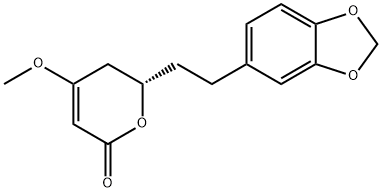
Dihydromethysticin is a kavalactone originally isolated from
P. methysticum (kava-kava) that has diverse biological activities, including efflux transporter inhibitory, antinociceptive, and neuroprotective properties. Dihydromethysticin is a P-glycoprotein (P-gp) inhibitor that increases uptake of the P-gp substrate calcein AM by 50% in P388 mouse leukemia cancer cells overexpressing P-gp when used at a concentration of 54.6 μM. Dihydromethysticin (275 mg/kg) has analgesic activity, increasing the latency to tail withdrawal in the tail-flick assay in mice. It also decreases the infarct size in a mouse model of ischemia induced by microbipolar coagulation of the left middle cerebral artery (MCA) when administered at a dose of 10 mg/kg.
Chemical Properties
White crystalline powder, soluble in organic solvents such as methanol, ethanol, and DMSO, derived from the rhizome of Pipermethysticum Forst.
Uses
(6S)-6-[2-(1,3-Benzodioxol-5-yl)ethyl]-5,6-dihydro-4-methoxy-2H-pyran-2-one, is used in toxicity studies through in vitro analysis. This complex is found in the roots of kava plant.
Definition
ChEBI: Dihydromethysticin is a member of 2-pyranones and an aromatic ether.
References
[1] D. D. JAMIESON P. H D. THE ANTINOCICEPTIVE ACTIONS OF KAVA COMPONENTS IN MICE[J]. Clinical and Experimental Pharmacology and Physiology, 1990, 17 7: 495-507. DOI:
10.1111/j.1440-1681.1990.tb01349.x[2] CORD BACKHAUΒ Josef K. Extract of kava (Piper methysticum) and its methysticin constituents protect brain tissue against ischemic damage in rodents[J]. European journal of pharmacology, 1992, 215 2: Pages 265-269. DOI:
10.1016/0014-2999(92)90037-5[3] JOHANNA WEISS. Extracts and kavalactones of Piper methysticum G. Forst (kava-kava) inhibit P-glycoprotein in vitro.[J]. Drug Metabolism and Disposition, 2005, 33 11: 1580-1583. DOI:
10.1124/dmd.105.005892