Uses
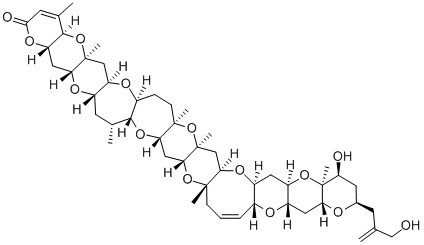
Brevetoxin-3 (PbTx-3) is a potent allosteric voltage-gated Na+channel activator and has multiple active centers (A-ring lactone, C-42 of R side chain)[1]. Brevetoxin-3 (PbTx-3) has a high affinity to site 5 of the voltage-sensitive Na+channels, inhibits the inactivation of Na+ channels and prolongs the mean open time of these channels. Brevetoxin-3 (PbTx-3) repeated exposures can lead to prolonged airway hyperresponsiveness (AHR) and lung inflammation[2].
General Description
Lipid-soluble polyether marine toxin produced by the red tide dinoflagellate,
Ptychodiscus brevis, found along the Gulf Coast of Florida. Voltage-dependent Na
+ channel activator that causes contractile paralysis in animal models by binding to a unique site on these channels. The excitatory action of brevetoxins on nerve and muscle membranes is responsible for a wide spectrum of the toxic effects, including massive transmitter release from nerve endings, muscle fasciculations, and ventricular fibrillation. The toxin does not bind to either tetrodotoxin or aconitine/veratridine sites.
Biochem/physiol Actions
Primary TargetVoltage-dependent Na+ channel activator
Safety Profile
A poison by ingestion,
intraperitoneal, and intravenous routes.
When heated to decomposition it emits
acrid smoke and irritating vapors.
in vivo
Brevetoxin-3 (PbTx-3)(intratracheal instillation; 2.8 μg/kg; gestational days 15-18)radioactivity is detected in placentas and fetuses within 0.5 hours. Concentrations of brevetoxin equivalents in fetuses are approximately 0.3 ng/g throughout the 48-h post-dosing, resulting in a calculated dose to fetuses of 19 ng/gh. Following brevetoxin infusion, concentration of brevetoxin equivalents in fetuses is 0.1 ng/g, lower than that present in most maternal tissues[3].
.
| Animal Model: | Pregnant CD-1 mice[3] |
| Dosage: | 2.8 μg/kg |
| Administration: | Intratracheal instillation; 2.8 μg/kg; gestational days 15–18 |
| Result: | Demonstrated placental transport of brevetoxin or its metabolites following maternal acute exposure. |
References
[1] Jeglitsch G,et al. Brevetoxin-3 (PbTx-3) and its derivatives modulate single tetrodotoxin-sensitive sodium channels in rat sensory neurons.J Pharmacol Exp Ther. 1998 Feb;284(2):516-25. PMID:9454792
[2] Zaias J,et al. Repeated exposure to aerosolized brevetoxin-3 induces prolonged airway hyperresponsiveness and lung inflammation in sheep.Inhal Toxicol. 2011 Mar;23(4):205-11. DOI:
10.3109/08958378.2011.558936[3] Benson JM, et al. Placental transport of brevetoxin-3 in CD-1 mice.Toxicon.2006 Dec 15;48(8):1018-26. Epub 2006 Aug 18. DOI:
10.1016/j.toxicon.2006.08.008