Uses
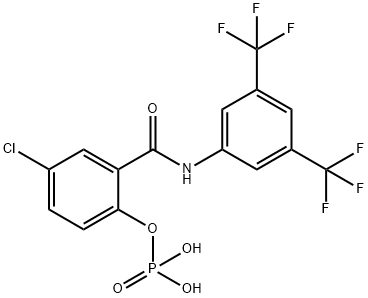
AER-271, a phosphonate proagent derivative of AER-270, is an aquaporin-4 (AQP4) inhibitor for the research of acute ischemic stroke[1].
Biological Activity
AER-271 is a phosphonate precursor (prodrug) form of the selective aquaporin 4 (AQP4) inhibitor IMD-0354 (AER-270; hu/m/r IC50 = 420/390/210 nM using respective CHO AQP4 transfectants) with >5000-fold enhanced solubility. AER-271 is rapidly converted to AER-270 in vivo (plasma AER-270 Cmax = 500 ng/mL or 1.75 μM, 20 min post 10 mg AER-271/kg i.p.; C57BL/6 mice) and exhibits therapeutic efficacy in rodent models of brain damage by cardiac arrest or ischemic stroke (5-10 mg/kg ip. & 0.08 mg/h sc. in mice; 1-10 mg/kg iv. in rats).
in vivo
AER-271 is converted in vivo to AER-270 by endogenous phosphatases. AER-271 blocks acute cerebral edema and improves early outcome in a pediatric model of asphyxial cardiac arrest[1].
AER-271 reduces cerebral edema and improves neurological outcomes in rodent ischemic stroke models. Mice treated with AER-271 (5 mg/kg; i.p. injection) show improved outcomes and reduced cerebral edema in a model of ischemic stroke[2].
| Animal Model: | Male mice (C57BL/6J, 8-12week-old, 25-30g)[2] |
| Dosage: | 5mg/kg |
| Administration: | Treated by i.p. injection |
| Result: | Had better outcomes with an average neurological score of 0.89±0.31 compared with control mice receiving vehicle had an average neurological score of 2.50±0.62. |
References
[1] Wallisch JS, et al. The aquaporin-4 inhibitor AER-271 blocks acute cerebral edema and improves early outcome in a pediatric model of asphyxial cardiac arrest. Pediatr Res. 2019 Mar;85(4):511-517. DOI:
10.1038/s41390-018-0215-5[2] Farr GW, et al. Functionalized Phenylbenzamides Inhibit Aquaporin-4 Reducing Cerebral Edema and Improving Outcome in Two Models of CNS Injury. Neuroscience. 2019 Apr 15;404:484-498. DOI:
10.1016/j.neuroscience.2019.01.034