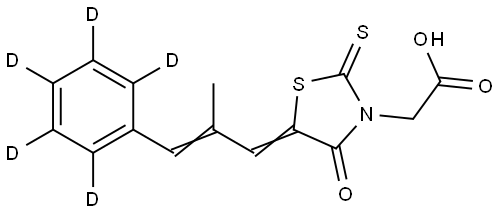
[1] Russak EM, et al. Impact of Deuterium Substitution on the Pharmacokinetics of Pharmaceuticals. Ann Pharmacother. 2019 Feb;53(2):211-216. DOI:
10.1177/1060028018797110[2] Ramirez, M.A. and N.L. Borja, Epalrestat: an aldose reductase inhibitor for the treatment of diabetic neuropathy. Pharmacotherapy, 2008. 28(5): p. 646-55. DOI:
10.1592/phco.28.5.646[3] He J, et al. The aldose reductase inhibitor epalrestat exerts nephritic protection on diabetic nephropathy in db/db mice through metabolic modulation. Acta Pharmacol Sin. 2019 Jan;40(1):86-97. DOI:
10.1038/s41401-018-0043-5[4] Okamoto, H., et al., Effects of epalrestat, an aldose reductase inhibitor, on diabetic neuropathy and gastroparesis. Intern Med, 2003. 42(8): p. 655-64. DOI:
10.2169/internalmedicine.42.655[5] Sato K, et al. Epalrestat increases intracellular glutathione levels in Schwann cells through transcription regulation. Redox Biol. 2013 Nov 19;2:15-21. DOI:
10.1016/j.redox.2013.11.003[6] Hotta, N., et al., Clinical investigation of epalrestat, an aldose reductase inhibitor, on diabetic neuropathy in Japan: multicenter study. Diabetic Neuropathy Study Group in Japan. J Diabetes Complications, 1996. 10(3): p. 168-72. DOI:
10.1016/1056-8727(96)00113-4[7] Li QR, et al. Epalrestat protects against diabetic peripheral neuropathy by alleviating oxidative stress and inhibiting polyol pathway. Neural Regen Res. 2016 Feb;11(2):345-51. DOI:
10.4103/1673-5374.177745[8] Zhang T, et al. The Aldose Reductase Inhibitor Epalrestat Maintains Blood-Brain Barrier Integrity by Enhancing Endothelial Cell Function during Cerebral Ischemia. Mol Neurobiol. 2023 Jul;60(7):3741-3757. DOI:
10.1007/s12035-023-03304-z