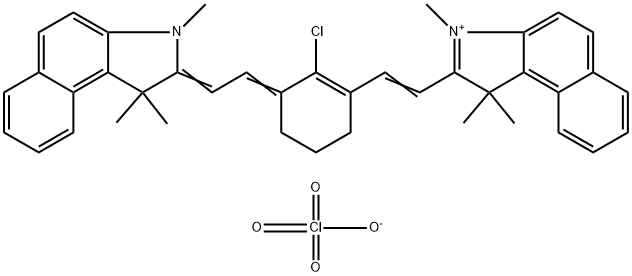
IR 813 perchlorate displays a maximum fluorescence intensity at 4 h postinjection together with a rapid extravasation, when being used for visualizing regional lymph nodes in mice[1].
Guidelines (Following is our recommended protocol. This protocol only provides a guideline, and should be modified according to your specific needs)[1].
1. Animal: Ten-week-old female Balb/cOlaAnN mice are kept in a 12 h light/dark cycle to reduce tissue autofluorescence in the NIR region, and had access to food and water ad libitum.
2. Dose: A single dose 5.1 nmol of IR 813 dye (20 μL of 0.173 mg/mL, dissolved in a PEG-400/ethanol/water=3:2:5, v/v/v solution) is subcutaneous injected in the right anterior paw of mice.
3. Imaging: Using the Fluobeam700 NIR imaging system to perform in vivo optical imaging (739 nm excitation light (3.5 mW), 750 nm long-pass emission cutoff filter).Fluorescence intensity in the axillary lymph node (ALN) is recorded for 1 week (5 min, 1 h, 4 h, 24 h, 7 days).
4. Data analysis: Semiquantitative data is obtained from the fluorescence images using ImageJ 1.44 software.