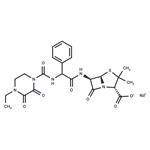
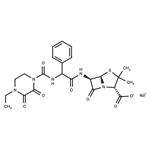
Piperacillin was synthesized by Toyama Chemicals Company in 1976by acylation of the amino residue of ampicillin. It shows excellent activity against a wide range of grampositive and gram-negative bacteria and has been used as the most potent semisynthetic penicillin. Piperacillin is administered intravenously or intramuscularly for therapy of sepsis, meningitis, respiratory and urinary tract infections, and for abdominal infections caused by Staphylococcus, Streptococcus, Escherichia coli, Klebsiella, Haemophilus influenzae, Serratia marcescens, Pseudomonas aeruginosa, Proteus, Enterobacter, Citrobacter, and Bacteroides.
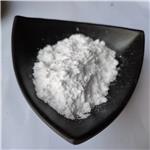
White to off-white crystalline powder
A broad spectrum antibiotic targeting a wide range of susceptible gram positive and gram negative bacteria. Piperacillin sodium salt is an antibiotic. It is used in pharmacokinetic studies to optimize antimicrobial therapy and in hypersensitivity reactions. It is involved in the study of multidrug-resistant organisms. It acts as an antibiotic related to penicillin.
Penicillin antibacterial.
ChEBI: Piperacillin sodium is an organic sodium salt. It contains a piperacillin(1-).
is typically prepared from palladium(II) chloride. Step 1: Preparation of LiPdCl solution: Stir palladium chloride, lithium chloride and ethanol overnight under nitrogen protection, then filter. Step 2: Preparation of Tris(dibenzylideneacetone)dipalladium-chloroform adduct: Under nitrogen atmosphere, combine dibenzylideneacetone, ethanol, CHCl and sodium acetate. Add LiPdCl solution at 50.6C53.2C. After maintaining the reaction for a period, cool and filter. The product was washed with water and ethanol, then treated with ethanol/CHCl. After filtration and drying, vacuum drying yielded the target product.