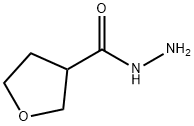
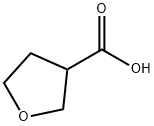
Example 6.1 (1014): isobutyl chloroformate (2.86 mL, 23.00 mmol) was added slowly and dropwise to a solution of tetrahydrofuran (THF, 42 mL) containing tetrahydro-3-furancarboxylic acid (2.0 mL, 20.9 mmol) and triethylamine (TEA, 5.8 mL, 42 mmol) at 0 °C. The reaction mixture was stirred continuously at 0 °C for 1 hour. Subsequently, hydrazine (0.67 mL, 23.00 mmol) was added to the reaction system and the mixture was continued to be stirred at room temperature for 1 hour. Upon completion of the reaction, the mixture was concentrated to remove the solvent. Chloroform (200 mL) and water (20 mL) were added to the residue to promote dissolution. The organic layer was separated and the aqueous phase was processed by lyophilization. The solid fraction was ground three times with ethanol (EtOH, 50 mL x 3). The ethanol solutions were combined, concentrated and dried to give the final tetrahydro-3-furancarbohydrazide (2.27 g). The product was detected by liquid chromatography-mass spectrometry (LCMS) electrospray ionization (ESI) in positive ion mode, m/z = 131.1 (M + H)+).