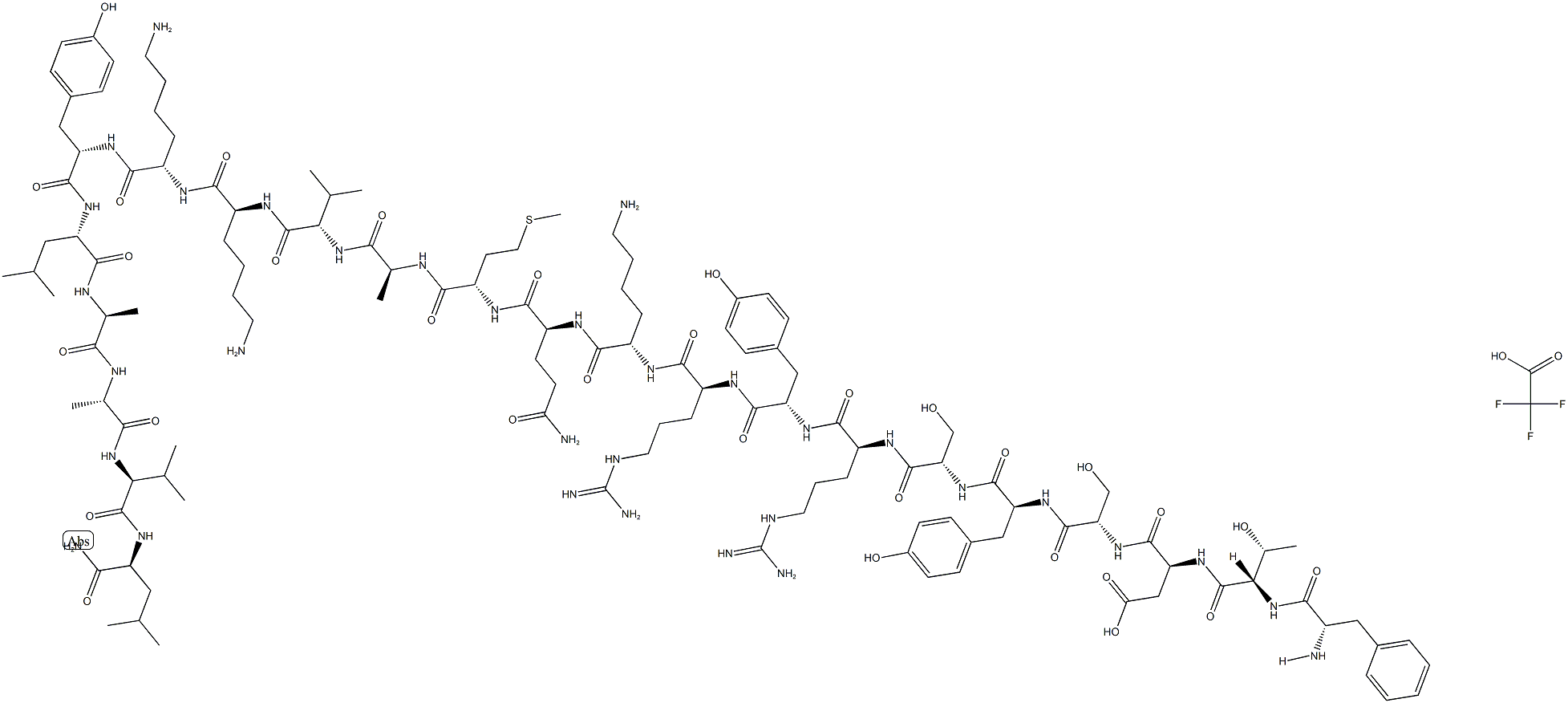
Pituitary adenylate cyclase-activating peptide (PACAP) (6-27) is a PACAP receptor antagonist with IC50 values of 1,500, 600, and 300 nM, respectively, for rat PAC1, rat VPAC1, and human VPAC2 recombinant receptors expressed in CHO cells.1 It binds to PACAP receptors on SH-SY5Y and SK-N-MC human neuroblastoma and T47D human breast cancer cells (IC50s = 24.5, 106, and 105 nM, respectively) and inhibits cAMP accumulation induced by PACAP (1-38) (Kis = 457, 102, and 283 nM, respectively, in SH-SY5Y, SK-N-MC, and T47D cells).2 In vivo, in newborn pigs, PACAP (6-27) (10 μM) inhibits vasodilation of pial arterioles induced by PACAP (1-27) (Item No. 24769) and PACAP (1-38) (Item No. 24770).3 It also inhibits PACAP (1-27)-stimulated increases in plasma insulin and glucagon levels and pancreatic venous blood flow in dogs when administered locally to the pancreas at a dose of 500 μg.4WARNING This product is not for human or veterinary use.
[1] PHILIPPE GOURLET. Fragments of pituitary adenylate cyclase activating polypeptide discriminate between type I and II recombinant receptors[J]. European journal of pharmacology, 1995, 287 1: Pages 7-11. DOI:
10.1016/0014-2999(95)00467-5[2] M. EGGENBERGER . Maxadilan interacts with receptors for pituitary adenylyl cyclase activating peptide in human SH-SY5Y and SK-N-MC neuroblastoma cells[J]. Neuropeptides, 1999, 33 2: Pages 107-114. DOI:
10.1054/npep.1999.0004[3] LAURA LENTI . Pituitary adenylate cyclase-activating polypeptide induces pial arteriolar vasodilation through cyclooxygenase-dependent and independent mechanisms in newborn pigs[J]. Brain Research, 2007, 1165: Pages 81-88. DOI:
10.1016/j.brainres.2007.06.032[4] NOBUHARU YAMAGUCHI Sanae Y Tamar Rita Minassian. Effects of PACAP(1-27) on the canine endocrine pancreas in vivo: interaction with cholinergic mechanism.[J]. Canadian journal of physiology and pharmacology, 2003, 81 7: 720-729. DOI:
10.1139/y03-067