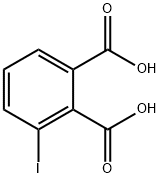
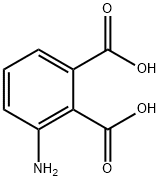
3-Aminophthalic acid (5.00 g, 27.6 mmol) was used as raw material and dissolved in 8.4 mol/L hydrochloric acid (60 mL). Under the cooling condition of an ice bath, aqueous sodium nitrate solution (10 mL containing 2.0 g, 29 mmol) was slowly added dropwise and the reaction was kept for 20 minutes. Subsequently, stirring was continued at the same temperature for 3 hours. Next, an aqueous solution (10 mL) of potassium iodide (6.9 g, 41 mmol) and urea (291 mg) pre-dissolved in potassium iodide (6.9 g, 41 mmol) and urea (291 mg) was added dropwise to the reaction mixture and transferred to room temperature and stirred for 20 hours. Upon completion of the reaction, the mixture was quenched by adding 10% aqueous sodium thiosulfate solution to the mixture and the product was extracted with ethyl acetate. The organic layer was washed with saturated brine and dried over anhydrous sodium sulfate. The solvent was removed by concentration under reduced pressure and the residue was washed with chloroform to give the final 3-iodophthalic acid (5.0 g, 62% yield).
[1] Patent: EP2108642, 2009, A1. Location in patent: Page/Page column 110
[2] Journal fuer Praktische Chemie (Leipzig), 1896, vol. <2> 53, p. 383
[3] Journal of the Chemical Society, 1914, vol. 105, p. 2480
[4] Bioorganic and Medicinal Chemistry, 2014, vol. 22, # 22, p. 6366 - 6379