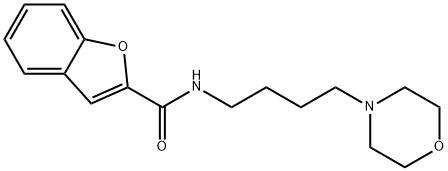
CL 82,198 is a selective inhibitor of human collagenase-3, also known as matrix metalloproteinase-13 (MMP-13), producing 89% inhibition at 10 μg/ml. It is without effect against MMP-1, MMP-9 or TNF-α converting enzyme. CL 82,198 is used to evaluate the role of MMP-13 in diverse processes, including cancer cell migration, acute lung injury, and joint degeneration associated with osteoarthritis.
CL-82198 is a selective inhibitor of human collagenase-3, known as matrix metalloproteinase-13.
Selective inhibitor of MMP-13 (89% inhibition at 10 μ g/mL) that displays no activity at MMP-1, MMP-9 or TACE. Inhibits in vitro invasion by the human pituitary adenoma cell line HP75.
CL-82198 is a selective inhibitor of MMP-13 that displays no activity at MMP-1, MMP-9 or TACE. It is also a selective S1′ pocket binder, binding within the entire S1′ pocket of MMP-13, docking with the morpholine ring adjacent to the catalytic zinc atom without zinc chelation.
cl-82198 was identified as a weak inhibitor against mmp-13 and demonstrated no activity against mmp-1, mmp-9, or the related enzyme tace. bearing drug-like properties, cl-82198 was regarded as an ideal candidate for optimization of enzyme potency and selectivity. in nmr binding studies, it was shown that cl-82198 bound within the entire s1’ pocket of mmp-13, which was the basis of its selectivity against mmp-1, mmp-9, and tace [1].
to investigate the contribution of mmp-13 down-regulation during gastroprotection by acetaminophen, the effects of cl-82198 on ibp-induced gastric damage were evaluated. results showed that cl-82198 decreased gastric lesions in a dose-dependent manner in the presence of ibp. compared with ibp administration alone, cl-82198 administered at 0.2 and 1.0 mg/kg resulted in 40.3% and 72.1% decrease in gastric lesion, respectively [1].
89% inhibition at 10μg/ml
[1] JAMES M. CHEN. Structure-Based Design of a Novel, Potent, and Selective Inhibitor for MMP-13 Utilizing NMR Spectroscopy and Computer-Aided Molecular Design[J]. Journal of the American Chemical Society, 2000, 122 40: 9648-9654. DOI:
10.1021/ja001547g