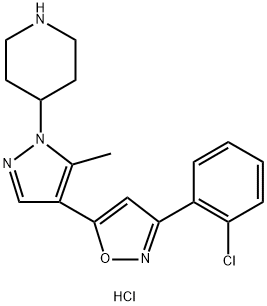
nAChR agonist CMPI hydrochloride is a potent and selective positive allosteric modulator (PAM) of nAChR containing a α4:α4 subunit interface. nAChR agonist CMPI hydrochloride enhances the response of (α4)3(β2)2 nAChR to ACh (10 μM) with an EC50 of 0.26 μM. nAChR agonist CMPI hydrochloride has potential for the research of nicotine dependence and many neuropsychiatric conditions associated with decreased brain cholinergic activity[1][2].
CMPI hydrochloride is a potent positive allosteric modulator of α4β2 nAChRs (EC50 values are 20 and 18 nM for rat and human, respectively). Selective for hα4β2 over hα3β2, hα3β4 and hα7. Inhibits (α4)2(β2)3, muscle-type and Torpedo nAChRs (IC50 values are 0.5, 0.7 and 0.2 μM, respectively), but not (α4)3(β2)2 receptors. Exhibits ability to photoincorporate into aliphatic and nucleophilic amino acid side chains.