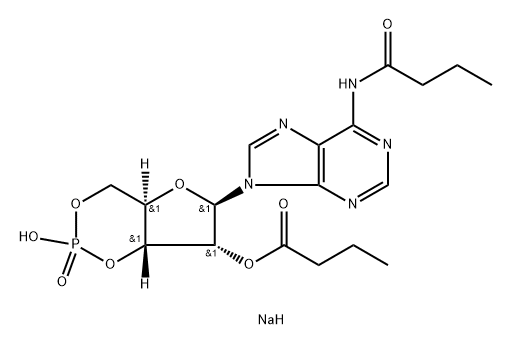
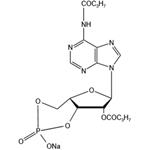
Bucladesine sodium is a derivative of cyclic-AMP with cardiac stimulant and
peripheral vasodilatory properties. It is reported to be useful in cardiac
insufficiency, especially after heart surgery.
Daiichi Seiyaku; Seishin Seiyaku (Japan)
Bucladesine sodium is an analog of cyclic AMP that stimulates cAMP-dependent protein kinase. It has vasodilator properties and is used as a cardiac stimulant.
N6,2′-O-Dibutyryladenosine 3′,5′-cyclic monophosphate sodium salt has been used:
as a medium supplement for neural crest stem cells (NCSCs) differentiation
as a component of thawing medium for cryopreserved human iPSC (induced pluripotent stem cell)-derived neurons
in serum-free Dulbecco′s modified eagle′s medium (DMEM) to induce astrocyte differentiation
ChEBI: Bucladesine sodium is a 3',5'-cyclic purine nucleotide.
A cell-permeable cAMP analog that preferentially activates cAMP-dependent protein kinase (PKA). Causes an increase in the steady state level of parathyroid hormone-related peptide mRNA. Also acts as a Hh pathway antagonist. Shown to induce apoptosis in vascular smooth muscle cells.
Cell-permeable cAMP analog that activates cAMP dependent protein kinase (PKA).
Preparation of bucladesine sodium: in the flask containing cyclic adenosine monophosphate slowly added sodium hydroxide aqueous solution (3 mol/L), the process of temperature control, the drop is completed warmed to room temperature, with HCl solution (20%) to adjust the pH to 7-8, add anhydrous ethanol precipitation of white solids, filtration, drying of the sodium salt of a white solid; the sodium salt and n-butyl anhydride under the protection of N2 warmed to 140 reaction, TLC monitoring the reaction is complete, and then reduced to room temperature. TLC monitoring, the reaction is complete after the drop to room temperature, slowly add methyl tert-butyl ether, the process of vigorous stirring, get nearly white solid crude product. A mixed solution of methyl tert-butyl ether and acetone was resuspended to obtain a white powdery target product.
Dibutyryl-cAMP, also known as bucladesine, is an analog of the second messenger cyclic adenosine 3'5'-monophosphate. Dibutyryl-cAMP is a phosphodiesterase inhibitor and a cAMP-dependent protein kinase activator that mimics the action of cAMP in cells. The anti-inflammatory activity of Dibutyryl-cAMP makes it an option for the treatment of skin inflammation. Exposure of rat glial cells to Dibutyryl-cAMP inhibited cell growth and increased glial fibrillary acidic protein levels, resulting in a change toward an astrocytic phenotype. Treatment of rat hepatocytes with Dibutyryl-cAMP suppressed both iNOS mRNA and protein expression, decreased iNOS promoter activity, and reduced DNA binding of the transcription factor NF-κB. Dibutyryl-cAMP treatment increased phosphorylated cAMP-response element-binding protein via protein kinase A signaling in rat pulmonary fibroblasts. Cells treated with Dibutyryl-cAMP exhibited a reduced number and size of silicosis nodules, and inhibited myofibroblast differentiation and extracellular matrix deposition.
1) Bartschet al.(2003),Bioactivatable, membrane-permeant analogs of cyclic nucleotides as biological tools for growth control of C6 glioma cells; Biol. Chem.,3841321
2) Carranzaet al.(1998),Protein kinase A induces recruitment of active Na+,K+-ATPase units to the plasma membrane of rat proximal convoluted tubule cells; J. Physiol.,15511
3) Heiet al.(1991),Lack of correlation between activation of cyclic AMP-dependent protein kinase and inhibition of contraction of rat vas deferens by cyclic AMP analogs; Mol. Pharmacol.,39233
4) Imamuraet al.(1998),Differential expression of dystrophin isoforms and utrophin during dibutyryl-cAMP-induced morphological differentiation of rat brain astrocytes; Proc. Natl. Acad. Sci. USA,956139
5) Xiaet al.(2016),Transcriptional comparison of human induced and primary midbrain dopaminergic neurons; Sci. Rep.,620270