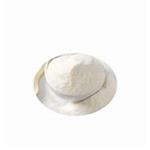
white to almost white powder
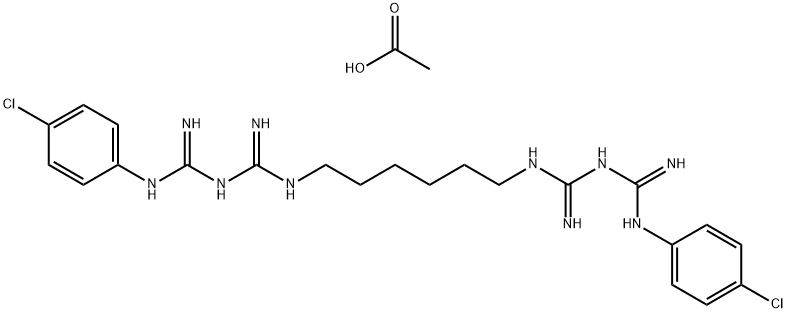
Chlorhexidine Diacetate is an antimicrobial dental impression materials.
ChEBI: Chlorhexidine acetate is the acetate salt of chlorhexidine. It is a disinfectant used for bacterial control in hospital, agricultural and domestic environments. It has a role as an antibacterial agent, an antiinfective agent, an antifungal agent and an antifouling biocide. It contains a chlorhexidine.
Chlorhexidine is a cationic broad-spectrum antimicrobial agent belonging to the bis(biguanide) family. Its mechanism of action involves destabilization of the outer bacterial membrane. It is effective against both Gram-positive and Gram-negative bacteria. Chlorhexidine is used primarily as a topical antiseptic/disinfectant in wound healing, at catheterization sites, in various dental applications and in surgical scrubs.
| Animal Model: | One hundred and eighty male Imprinting Control Region (ICR) mice at 6 to8-wk-old (body weight, 25 ± 3 g) were randomized to six groups[1]. |
| Dosage: | Chlorhexidine gluconate 0.05%, and Chlorhexidine gluconate 0.025%. |
| Administration: | One-time intraperitoneal injection. |
| Result: | A total of 48 mice (26.7%) developed postoperative intra-abdominal abscesses. Mice that had Chlorhexidine gluconate 0.05% lavage had significantly lower incidence of postoperative intra-abdominal abscesses compared with that of group D mice that had saline lavage only (P = 0.0113). Microscopic peritoneal fibrosis occurred significantly more among group E mice that had Chlorhexidine gluconate 0.05% lavage compared with group D mice that had saline lavage only (P = < 0.005). |