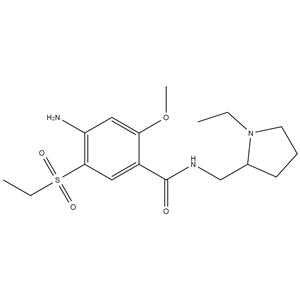
Amisulpride is an atypical dopamine D2/D3 receptor antagonist with Kis of 2.8 and 3.2 nM for human dopamine D2 and D3, respectively. Amisulpride (100 nM) inhibits quinpirole-elicited [3H]thymidine incorporation with an IC50 value of 22±3 nM (n=3). Amisulpride slightly but significantly increases [3H]dopamine release from slices of the rat striatum (S2/S1=0.88±0.04 under control conditions, n=6; 1.04±0.08 in the presence of 100 nM Amisulpride,n=4; P<0.05) and opposes the inhibitory effects of 7-OH-DPAT in both brain areas[1].
In Vivo
Only the highest dose of Amisulpride (100 mg/kg) significantly reduces dopamine levels in the striatum or limbic system. Amisulpride significantly increases the synthesis of dopamine in the rat striatum and limbic system at doses of 20 and 100 mg/kg. Amisulpride (0.5 to 75 mg/kg) fails to provoke an additional increase in dopa accumulation in the striatum but slightly accelerates, at 75 mg/kg, dopamine synthesis in the limbic system. In comparison with vehicle-treated controls, Amisulpride (10 mg/kg) increases extracellular dopamine levels. The administration of Amisulpride (0.5 to 15 mg/kg s.c.) provokes a time- and dose-dependent increase in the stimulation-evoked dopamine release. Amisulpride decreases striatal ACh levels significantly at 30 and 100 mg/kg (87.5% and 56.3% of control levels, respectively)[1]. In both acute study, Amisulpride (70 mg/kg, p.o.) significantly increases the duration of swimming behavior [F(3,28)=45.90, p<0.01][2].
Cell Assay
The functional effects of Amisulpride at the dopamine D3 receptor subtype are assessed. Briefly, the mitogenic response elicited in NG108-15 neuroblastoma-glioma cells stably transfected with human dopamine D3 receptor cDNA by the addition of 10 nM quinpirole in the presence of 1 μM forskolin is quantified by the incorporation of [3H]thymidine. Antagonism of quinpirole-induced mitogenesis is measured in the presence of increasing (0.1 to 100 nM) concentrations of Amisulpride[1].
Animal Admin
A total of 64 male Swiss albino mice weighing between 20 to 30 g are used. The animals are fed with standard pellet diet and water ad libitum. The mice are divided in different groups (n=8 in each group) and drug administration is done as follows: Group 1 (control): distilled water (1 mL/kg) 23.5, 5 and 1 h before the test. Group 3 (Amisulpride): Amisulpride (70 mg/kg) 23.5, 5 and 1 h before the test[2].
References
[1]. Schoemaker H, et al. Neurochemical characteristics of amisulpride, an atypical dopamine D2/D3 receptor antagonist with both presynaptic and limbic selectivity. J Pharmacol Exp Ther. 1997 Jan;280(1):83-97.
[2]. Pawar GR, et al. Evaluation of antidepressant like property of amisulpride per se and its comparison with fluoxetine and olanzapine using forced swimming test in albino mice. Acta Pol Pharm. 2009 May-Jun;66(3):327-31.
Literature: Societe d'Etudes Scientifiques et Industrielles de l'Ile de-France Patent: US4294828 A1, 1981 ;
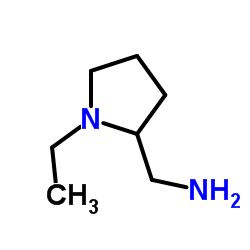
2-(Aminomethyl)...
CAS#:26116-12-1
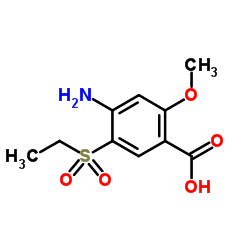
4-Amino-5-(ethy...
CAS#:71675-87-1
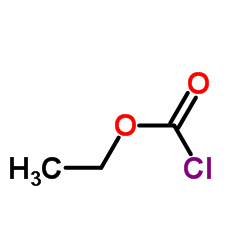
Ethyl chloroformate
CAS#:541-41-3
~61%
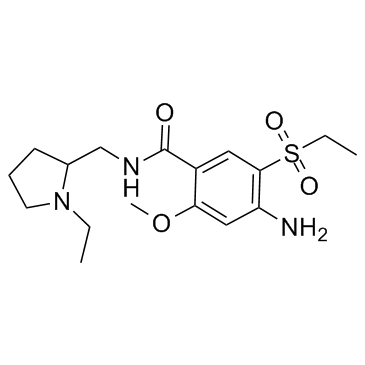
Amisulpride
CAS#:71675-85-9
Literature: Societe d'Etudes Scientifiques et Industrielles de l'Ile de-France Patent: US4294828 A1, 1981 ;
Precursor & DownStream
Precursor 7
Previous 1/2 Next
CAS#:26116-12-1 2-(Aminomethyl)...
CAS#:71675-87-1 4-Amino-5-(ethy...
CAS#:541-41-3 Ethyl chloroformate
CAS#:27492-84-8 Methyl 4-amino-...
DownStream 0
Customs
HS Code
2933990090
Summary
2933990090. heterocyclic compounds with nitrogen hetero-atom(s) only. VAT:17.0%. Tax rebate rate:13.0%. . MFN tariff:6.5%. General tariff:20.0%
Articles2
More Articles
The antipsychotic amisulpride: ultrastructural evidence of its secretory activity in salivary glands.
Oral Dis. 20(8) , 796-802, (2014)
Amisulpride is reported to inhibit clozapine-induced sialorrhea. Preclinically, clozapine evokes muscarinic-M1-type-mediated secretion that, however, amisulpride does not reduce. Instead, amisulpride,...
A double-blind, randomized comparative trial of amisulpride versus olanzapine for 6 months in the treatment of schizophrenia.
Int. Clin. Psychopharmacol. 19 , 63-69, (2004)
Atypical antipsychotics offer advantages over earlier drugs for the treatment of schizophrenia, although few data exist on the relative merits of different atypical antipsychotics. A multicentre, doub...
Henan Fengda Chemical Co., Ltd. a research customization and supplier specializing in PPb grade ultra-high purity electronic chemicals, deeply rooted in the semiconductor and new display fields, committed to providing the most core and purest chemical components for photoresist and high-end display materials.
We provide key monomers for KrF/ArF photoresist, photoacid generators (PAGs), photoacids, and etching solution raw materials, providing cornerstone materials for advanced process photoresist formulations;
We take ICP-MS full spectrum metal impurity analysis as the quality cornerstone and provide ICP-MS metal impurity COA reports to meet the strict industry requirements for PPb grade electronic chemical materials. The COA report contains important data such as NA, Mg, K, Ca, Al, Cr, Fe, Ni, Cu, Zn, Pb, Ag, etc. To provide customers with pure and reliable source assurance for cutting-edge research and stable production.



 China
China



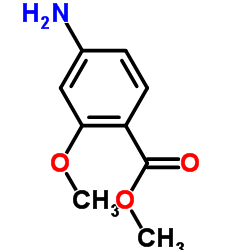 CAS#:27492-84-8