Items | Specifications | Results |
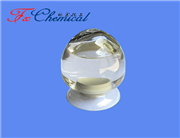
APPEARANCE (25°C) | CLEAR LIQUID | Pass |
ODOR | CHARACTERISTIC | Pass |
RSPO SUPPLY CHAIN MODEL | MASS BALANCE | Pass |
RSPO CERTIFICATION NUMBER | SCS-RSPOSCC-000429 | Pass |
ACID VALUE | 0.0-5.0 | 1.2 mg KOH/g |
SAPONIFICATION VALUE | 100-115 | 105 mg KOH/g |
Conclusion | The product conforms to the above specifications. |
The name is a systematic IUPAC name that describes the molecule precisely. Let's break it down:
Tetradecanoate: This is the ester form of tetradecanoic acid, which is more commonly known as myristic acid (a 14-carbon saturated fatty acid found in coconut oil and palm kernel oil).
1-phenylmethoxypropan-2-yl: This describes the alcohol part of the ester.
Propan-2-yl: An isopropyl group (CH3)2CH-.
1-phenylmethoxy: At the "1" position of the isopropyl group, there is a phenylmethoxy group. "Phenylmethoxy" is another name for benzyloxy (C6H5-CH2-O-).
In simpler terms, the molecule is a hybrid ester-ether:
It is formed by reacting myristic acid with a modified glycerol-like alcohol.
The alcohol component is essentially isopropyl alcohol where one of the methyl groups has been extended with a benzyl ether linkage.
Chemical Structure Analogy:
Imagine a molecule with three arms:
A long, fatty chain (myristate) attached via an ester bond.
A small methyl branch (from isopropyl).
A benzyl ether group (phenylmethoxy) attached to the same central carbon.
It can be visualized as a benzyl ether derivative of isopropyl myristate, a very common emollient.
2. Properties (Inferred from Structure)
Given its structure, we can predict its key properties:
Physical State: Likely a colorless to pale yellow liquid or low-melting solid.
Solubility: It will be hydrophobic/lipophilic.
Soluble in: Oils, fats, organic solvents (ethanol, propylene glycol, ether).
Insoluble in: Water.
Functionality: Combines the properties of the fatty acid ester (emollience, skin feel, solvent) and the benzyl group (potential fragrance, preservative enhancement, altered polarity).
3. Uses and Applications
This is not a common, widely recognized industrial chemical with a standard "use." Instead, it is a specialty chemical ingredient likely used in specific, high-performance formulations. Its applications can be deduced from its structural parts:
Primary Use: Cosmetic and Personal Care Ingredient
It would function primarily as a high-end emollient, skin feel modifier, and carrier agent.
Emollient: The myristate ester provides excellent slip, spreadability, and a non-greasy, velvety skin feel. It helps to soften and smooth the skin.
Solubilizer & Carrier: It can help dissolve other oily active ingredients or fragrance components in a formulation.
Benzyl Group Benefit: The benzyl ether moiety might enhance the fragrance longevity or modify the polarity of the molecule, allowing it to interact differently with skin and other formulation components compared to standard esters like isopropyl myristate. It may also have mild preservative-boosting properties.
Potential Niche Uses:
Pharmaceutical Topicals: As a penetration enhancer or solvent for active pharmaceutical ingredients in creams or ointments.
Specialty Lubricants: In very small-scale or sensitive applications (e.g., in precision instruments or cosmetics where specific textures are required).
Chemical Intermediate: Used in organic synthesis to introduce a specific fatty acid and protected alcohol group into a larger molecule.
4. Important Notes and Cautions
Not a Common Name: You will not find it on standard consumer product ingredient lists (like INCI names). It may be supplied under a trade name.
Safety: No specific safety data is widely available for this exact compound. Safety would be assessed based on its components:
Sourcing: It is a specialty chemical that would be sourced from fine chemical suppliers (e.g., TCI Chemicals, Sigma-Aldrich, Alfa Chemistry) for research or specific formulation development, not in bulk commodity markets.
Summary
1-Phenylmethoxypropan-2-yl tetradecanoate is a synthetic ester-ether hybrid molecule combining a myristic acid (fatty) chain with a benzyl-modified isopropyl group. Its primary use is predicted to be as a specialty emollient and formulation aid in high-end cosmetics and personal care products, where it would improve texture, spreadability, and sensory feel. Its unique structure may offer specific solubility or stability benefits compared to more common esters.


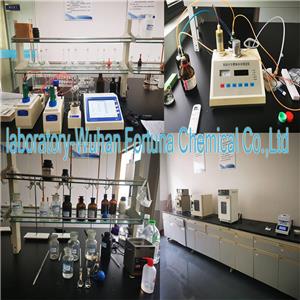

 China
China