Property | Value |
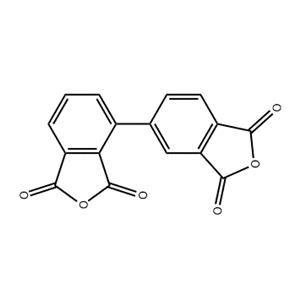
Chemical Name | 2,3,3',4'-Biphenyltetracarboxylic dianhydride (also known as α-BPDA or a-BPDA) |
CAS Number | 36978-41-3 |
Molecular Formula | C₁₆H₆O₆ |
Molecular Weight | 294.22 g/mol |
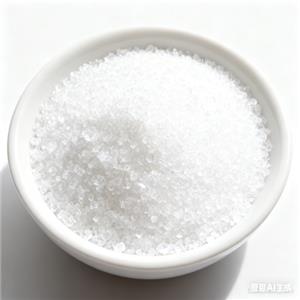
Appearance | White to off-white powder or crystal |
Melting Point | 196–199 °C |
Boiling Point | 609.3 ± 48.0 °C (predicted) |
Density | 1.406–1.6 g/cm³ |
Description of 2,3,3,4-biphenyl tetracarboxylic dianhydride
2,3,3',4'-Biphenyltetracarboxylic dianhydride (also known as α-BPDA or a-BPDA, CAS: 36978-41-3) is an unsymmetrical aromatic dianhydride with the molecular formula C₁₆H₆O₆. This white to off-white crystalline powder serves as a key monomer in the synthesis of high-performance polyimides. When polymerized with various diamines, α-BPDA produces polyimides with exceptional thermal stability, low coefficient of thermal expansion, high transparency, and excellent mechanical properties. Its asymmetric structure enhances solubility and processability compared to symmetric isomers.
Application of 2,3,3,4-biphenyl tetracarboxylic dianhydride
High-Performance Polyimides for Flexible Electronics. α-BPDA is used as a monomer to produce colorless, transparent polyimides with low birefringence and excellent thermal stability. These films are ideal for flexible displays, OLED substrates, and flexible printed circuits in smartphones, tablets, and wearable devices.
Aerospace and High-Temperature Composites. α-BPDA-based polyimides offer superior heat resistance, low coefficient of thermal expansion, and high mechanical strength. They are employed in aerospace components such as engine parts, radomes, and structural composites that require durability under extreme temperatures.
Optical and Optoelectronic Applications. The asymmetric structure of α-BPDA enhances solubility and processability, enabling the fabrication of high-clarity polyimide films and coatings. These are widely used in optical waveguides, liquid crystal displays (LCDs), and other optoelectronic devices.
Advanced Coatings and Films. α-BPDA polyimides provide exceptional chemical resistance, low dielectric constant, and high dimensional stability. They are applied as protective coatings, insulating layers, and high-temperature films in semiconductor manufacturing and electronics.
Specialty High-Performance Materials. This dianhydride is incorporated into polyimides for nuclear, automotive, and industrial applications requiring ultra-high thermal endurance, low outgassing, and excellent mechanical properties under harsh environments.
Storage of 2,3,3,4-biphenyl tetracarboxylic dianhydride
It should be kept in a cool, dry, well-ventilated area at temperatures between 2–8°C (refrigerator recommended). Keep containers tightly sealed to prevent moisture absorption, which can lead to hydrolysis of the anhydride groups. Protect from heat, direct sunlight, and incompatible substances such as strong bases, water, or amines. Use inert gas (e.g., nitrogen) blanketing for long-term storage to minimize reactivity. Handle under dry conditions or in a glovebox if possible.


 China
China


