Property | Value |
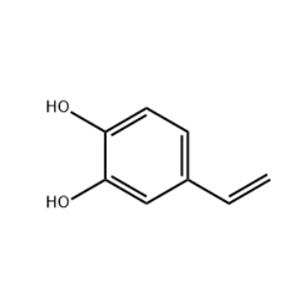
Systematic Name | 4-Ethenylbenzene-1,2-diol |
Common Name | 3,4-Dihydroxystyrene |
CAS Number | 6053-02-7 |
Molecular Formula | C₈H₈O₂ |
Molecular Weight | 136.15 g/mol |
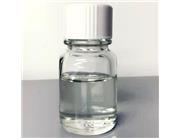
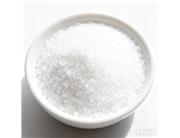
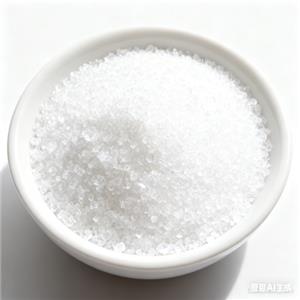
Appearance | White to off-white solid |
Melting Point | 50-53 °C |
Boiling Point | 275.5 ± 28.0 °C (predicted) |
Density | 1.213 ± 0.06 g/cm³ (predicted) |
Solubility | Slightly soluble in chloroform, DMSO, methanol; 3 g/L in water (25 °C) |
Description of 3,4-dihydroxystyrene
3,4-Dihydroxystyrene (CAS: 6053-02-7), also known as 4-vinylcatechol or DHS, is a bioactive styrene derivative with the molecular formula C₈H₈O₂ and molecular weight of 136.15 g/mol. As a metabolite of styrene, DHS acts as a potent inhibitor of phenylalanine hydroxylase and other hydroxylases (tyrosine, tryptophan), showing promise in treating metabolic disorders like phenylketonuria.
Application of 3,4-dihydroxystyrene
3,4-Dihydroxystyrene (DHS), also known as 4-vinylcatechol, is a versatile catechol derivative primarily utilized as a bioactive metabolite of styrene in biochemical research. It functions as a potent, centrally-acting inhibitor of phenylalanine hydroxylase (PH) and other hydroxylases (e.g., tyrosine, tryptophan), showing therapeutic potential in managing metabolic disorders like phenylketonuria by modulating neurotransmitter synthesis and enzyme activity. In materials science, DHS serves as a key monomer for polymerizing redox-active poly(3,4-dihydroxystyrene), enabling applications in biomedical adhesives, advanced coatings, and bioconjugation processes due to its reactive hydroxyl groups and adhesive properties.
Storage of 3,4-dihydroxystyrene
3,4-Dihydroxystyrene is light- and temperature-sensitive, requiring storage in an amber vial to block UV exposure. Maintain under an inert atmosphere, such as nitrogen, to prevent oxidation and polymerization. Use airtight, moisture-proof containers in a dry environment. Avoid repeated freeze-thaw cycles. For short-term handling, keep at -20°C.


 China
China