Property | Value |
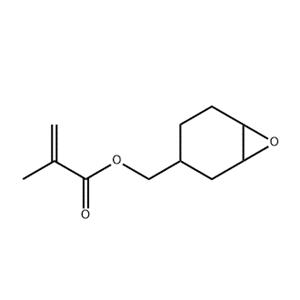
Synonyms | 7-Oxabicyclo[4.1.0]heptan-3-ylmethyl methacrylate; Methacrylic acid 7-oxabicyclo[4.1.0]hept-3-ylmethyl ester; METHB; Cyclomer M 100 |
Molecular Formula | C₁₁H₁₆O₃ |
Molecular Weight | 196.24 g/mol |
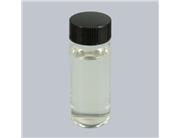
Appearance | Pale yellow to light yellow transparent liquid |
Density | 1.079 g/cm³ (predicted/estimated) |
Boiling Point | 275 °C (predicted) |
Flash Point | 110 °C |
Viscosity (25°C) | ≤50.0 cps |
Description of 3,4-Epoxycyclohexylmethyl methacrylate
3,4-Epoxycyclohexylmethyl methacrylate (CAS: 82428-30-6), also known as Cyclomer M100 or 7-oxabicyclo[4.1.0]heptan-3-ylmethyl methacrylate, is a dual-functional monomer. This reactive diluent combines a cycloaliphatic epoxy group with a methacrylate functionality, enabling UV/EB cationic or radical curing.
Application of 3,4-Epoxycyclohexylmethyl methacrylate
UV/EB Curable Coatings. Acts as a reactive diluent in UV/EB-curable coatings, providing low viscosity, fast curing, low shrinkage, and excellent adhesion for wood, plastic, and metal surfaces.
Inks and Printing. Used in UV-curable inks (flexographic, screen, and inkjet) to enhance gloss, scratch resistance, and weatherability while maintaining good flow properties.
Adhesives and Sealants. Incorporated into UV-curable adhesives for electronics, optics, and structural bonding, offering high bonding strength, thermal stability, and chemical resistance.
3D Printing Resins. Serves as a key monomer in SLA/DLP photopolymer resins, contributing to improved mechanical properties, high resolution, and post-cure stability.
Electronics and Optical Materials. Applied in encapsulants, conformal coatings, and optical clear adhesives, delivering superior electrical insulation, low moisture absorption, and UV resistance.
Storage of 3,4-Epoxycyclohexylmethyl methacrylate
It should be kept in a tightly sealed original container in a cool, dry, well-ventilated area away from direct sunlight, heat sources, and open flames. Recommended storage temperature: 2–8°C (refrigerator) for optimal stability. Keep away from strong acids, bases, amines, oxidizing agents, and initiators to prevent premature polymerization or curing. The product is moisture-sensitive and may react with water or humidity. Use an inert atmosphere (nitrogen) if possible.



 China
China