Property | Value / Description |
IUPAC Name | 5,5'-Oxybis(2-benzofuran-1,3-dione) |
Synonyms | 4,4'-Oxydiphthalic anhydride; ODPA; 4,4'-Diphthalic anhydride ether |
Molecular Formula | C₁₆H₆O₇ |
Molecular Weight | 310.21 g/mol |
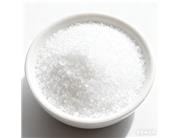
Appearance | White to off-white crystalline powder |
Melting Point | 225–229 °C |
Density | ~1.5 g/cm³ (predicted) |
Solubility | Slightly soluble in water; soluble in acetone, DMF, DMSO, NMP; reacts with water/alcohols |
Description of 4,4'-Oxydiphthalic anhydride
4,4'-Oxydiphthalic anhydride (ODPA, CAS: 1823-59-2), also known as 5,5'-oxybis(isobenzofuran-1,3-dione) or bis-(3-phthalyl anhydride) ether, is an aromatic dianhydride monomer. Introduced in the mid-1980s, ODPA is pivotal in synthesizing flexible polyimides, imparting superior mechanical strength, electrical insulation, and solvent resistance.
Application of 4,4'-Oxydiphthalic anhydride
Flexible Printed Circuits (FPC) & FCCL. Key monomer for low-Dk, low-loss polyimide films used in 5G/6G high-frequency substrates.
Flexible OLED/AMOLED Display Films. Provides high thermal stability and dimensional stability for next-generation flexible displays.
Semiconductor Passivation & Photoresist. Used in high-resolution photosensitive polyimides (PSPI) for chip packaging and microelectronics.
High-Temperature Engineering Plastics. Enables polyimides with superior heat resistance and mechanical strength for aerospace and automotive parts.
Insulation Coatings & Advanced Composites. Delivers excellent thermal, chemical, and radiation resistance for aerospace and electronic insulation applications.
Storage of 4,4'-Oxydiphthalic anhydride
It should be kept in a cool, dry, well-ventilated area away from moisture and direct sunlight. Keep tightly sealed in the original container to prevent absorption of atmospheric humidity, which may cause hydrolysis. Avoid contact with water, strong acids, bases, and oxidizing agents.




 China
China