Adenine, a purine nucleobase, has several important applications across various fields, including biochemistry, medicine, and biotechnology. Here are some key applications:
### 1. **DNA and RNA Synthesis**
- Adenine is one of the four nucleobases in **DNA** (along with thymine, cytosine, and guanine) and **RNA** (where thymine is replaced by uracil). It plays a crucial role in genetic coding and protein synthesis.
### 2. **ATP (Adenosine Triphosphate)**
- Adenine is a component of **ATP**, the primary energy carrier in cells. ATP is essential for metabolic processes, muscle contraction, and cellular signaling.
### 3. **NAD and FAD (Coenzymes)**
- Adenine is part of **NAD (Nicotinamide Adenine Dinucleotide)** and **FAD (Flavin Adenine Dinucleotide)**, which are critical for redox reactions in cellular respiration and energy production.
### 4. **Pharmaceuticals & Medicine**
- **Antiviral & Anticancer Drugs**: Adenine derivatives (e.g., **acyclovir**, **fludarabine**) are used in antiviral and chemotherapy treatments.
- **Immunosuppressants**: Drugs like **azathioprine** (used in organ transplants) contain adenine derivatives.
- **Vitamin B4**: Adenine was historically referred to as Vitamin B4, though it is no longer classified as a vitamin since it is synthesized by the body.
### 5. **Biotechnology & Molecular Biology**
- Used in **PCR (Polymerase Chain Reaction)** and DNA sequencing.
- Adenine-rich sequences are used in **gene probes** and **primer design**.
### 6. **Nutritional Supplements**
- Sometimes included in cell culture media to support nucleic acid synthesis in lab-grown cells.
### 7. **Chemical Research**
- Adenine derivatives are studied for potential applications in **organic electronics** and **nanotechnology** due to their hydrogen-bonding properties.

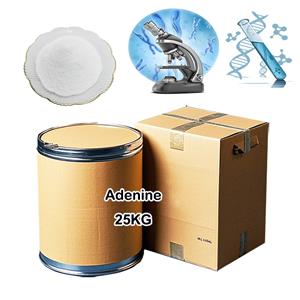

 China
China