Cetylpyridinium Chloride Impurity;4860-03-1

WhatsAPP: +86 17386083646
E-mail: anna@molcoo.com
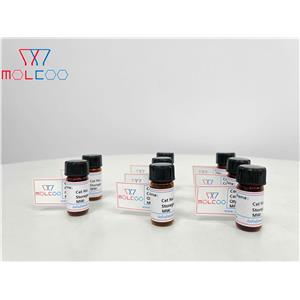
Product Code:A039016
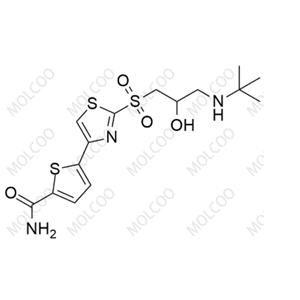
English Name:Arotinolol Impurity E
English Alias:5-(2-((3-(tert-butylamino)-2-hydroxypropyl)sulfonyl)thiazol-4-yl)thiophene-2-carboxamide
CAS No.:Not provided
Molecular Formula:C₁₅H₂₁N₃O₄S₃
Molecular Weight:403.54
High-Purity Reference Standard:Confirmed by HPLC (≥99.0%), NMR (1H, 13C), HRMS, and elemental analysis, suitable for Arotinolol impurity analysis and quality control.
Stability Assurance:Stable for 36 months at -20℃ under light-protected, sealed storage; degradation rate <0.3% in methanol-water mixture within 6 months.
Quality Control Testing:Used for UPLC-MS/MS detection of Impurity E in Arotinolol API and formulations, controlling content to meet ICH Q3A standards (single impurity limit ≤0.1%).
Process Optimization Research:Monitors impurity formation during Arotinolol synthesis, reducing generation by >35% by adjusting thiazole sulfonylation temperature (e.g., 50-60℃) and reaction time.
Method Validation:Serves as a standard for developing sulfur heterocycle impurity detection methods, verifying UPLC resolution (≥3.0) and LOD (0.01 ng/mL).
Arotinolol, an antihypertensive drug with both α and β receptor blocking effects, is used for treating essential hypertension and angina. Impurity E, a process-related impurity in its synthesis, may originate from thiazole ring sulfonylation side reactions or abnormal hydroxyl protection steps. Its thiophene ring, thiazole ring, sulfonyl group, and tert-butylamino may affect drug lipophilicity, metabolic stability, and receptor binding. Strict impurity control for cardiovascular drugs is critical to drug quality, making research on this impurity essential.
Detection Technology:UPLC-MS/MS with C18 column (1.7μm) and 0.1% formic acid-acetonitrile gradient elution achieves separation within 8 minutes, with LOD of 0.005 ng/mL for trace impurity analysis.
Formation Mechanism:Formed by sulfonylation of 3-(tert-butylamino)-2-hydroxypropyl mercaptan with 2-chloro-4-thiazolesulfonyl chloride under alkaline catalyst (e.g., triethylamine), followed by condensation with thiophene-2-carboxamide; optimizing condensation conditions inhibits side reactions.
Safety Evaluation:In vitro cytotoxicity shows IC₅₀ of 176.5 μM against H9c2 cardiac cells (Arotinolol IC₅₀=5.8 μM), with lower toxicity than the main drug but requiring strict content control. Long-term stability testing is ongoing to monitor sulfonyl hydrolysis risks under high temperature and humidity conditions.
NOTE!
We can also customize related analogues and modified peptides including HPLC, MS, 1H-NMR, MS, HPLC, IR, UV, COA, MSDS.
This product is intended for laboratory use only!
WhatsAPP: +86 17386083646
E-mail: anna@molcoo.com
NEW IN STOCK!
The Molcoo Laboratory added drug impurity reference standards, including Baricitinib, Piperazine, Benzylpenicillin, Tranilast and multiple N-Nitroso drug impurities! Now available for immediate delivery!




 China
China