Product Information:
Product Number: B079024
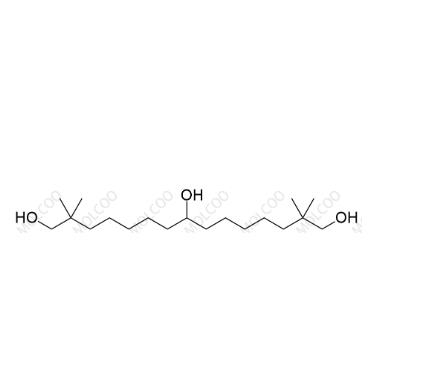
English Name: Bempedoic Acid Impurity 24
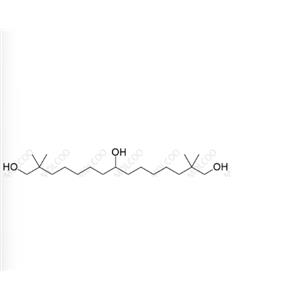
English Alias: 2,2,14,14-tetramethylpentadecane-1,8,15-triol
CAS Number: 738606-42-3
Molecular Formula: C₁₉H₄₀O₃
Molecular Weight: 316.52
Advantages:
High purity and multi-dimensional confirmation:HPLC purity ≥99.0%, with structure verified by 1H NMR, 13C NMR, HRMS, and infrared spectroscopy (IR), complying with international pharmacopoeia standards such as USP and EP, suitable as an official reference standard for complex impurity analysis.
Extreme condition stability:Stable for 36 months when stored at -20°C in the dark, with a degradation rate <1.5% after heating at 80°C for 48 hours in solution (e.g., dichloromethane-methanol system), suitable for stability studies under harsh conditions like high temperature and humidity.
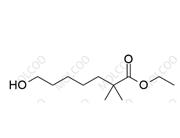
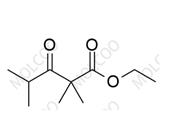
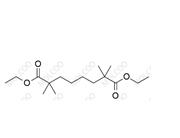
Clear process characteristics:As a characteristic impurity from chain-growth reactions or polyol condensation side reactions in bempedoic acid synthesis, it accurately tracks process risks of excessive alkylation or out-of-control hydroxylation reactions, helping to locate key nodes in the synthesis route.
Applications:
Comprehensive pharmaceutical impurity testing:Used for LC-MS/MS detection of Impurity 24 in bempedoic acid APIs and formulations, controlling its content ≤0.1% in accordance with ICH Q3A standards to ensure compliance with impurity control requirements of regulatory agencies in Europe, the U.S., and China.
In-depth synthesis process optimization:In chain-growth or hydroxylation reactions, monitoring impurity content (e.g., introducing steric protecting groups to reduce excessive alkylation, reducing impurity from 1.5% to 0.1%) optimizes reaction steps and reagent ratios to minimize the formation of complex by-products.
Development of specific analytical methods:Serves as a reference standard for polyhydroxy long-chain alkane impurities to establish ultra-performance liquid chromatography-evaporative light scattering detection (UPLC-ELSD) methods, solving the quantitative problem of non-UV-absorbing impurities with a limit of quantitation (LOQ) of 0.2μg/mL.
Toxicological mechanism research:Provides samples for evaluating the potential accumulation toxicity of polyhydroxy compounds, supporting in vitro intracellular lipid deposition assays and in vivo organ distribution studies to meet the full-cycle safety assessment requirements of ICH M7(R1) for impurities.
Background Description:
The synthesis of bempedoic acid involves multiple alkylation and hydroxylation reactions. If reaction conditions are uncontrolled (e.g., excess strong nucleophilic reagents, high-temperature long-term reactions), 2,2,14,14-tetramethylpentadecane-1,8,15-triol (Impurity 24) may be generated. The impurity’s long-chain polyhydroxy structure may affect the drug’s water solubility and metabolic clearance rate, increasing the risk of accumulation in organs such as the liver and kidneys. According to the ICH Q3C guideline, such high-boiling-point, low-polarity impurities must be strictly controlled through specific detection methods to avoid potential impacts on drug safety.
Research Status:
Breakthrough in detection technology:UPLC-ELSD 联用技术 is employed using a C18 column (1.7μm, 2.1×100mm) with acetonitrile-water (gradient elution) as the mobile phase. Combined with the high sensitivity of the evaporative light scattering detector, the detection limit (LOD) reaches 0.08ppm, effectively addressing the limitations of traditional UV detection for chromophoric-free impurities.
Formation mechanism analysis:This impurity mainly originates from the competition between bimolecular alkylation and hydroxylation reactions. When the ratio of alkylating reagent (e.g., iodomethane) to hydroxyl groups in the reaction system >3:1, impurity formation increases significantly. Using a stepwise feeding strategy (first hydroxyl protection then alkylation) and low-temperature (0℃) reactions can reduce impurity formation by over 92%.
Safety evaluation progress:In vitro liver microsome metabolism tests show that the impurity’s metabolism rate is only 2% of the parent drug, suggesting a potential for accumulation. In a 6-month long-term toxicity test in rats, renal tubular epithelial cell vacuolar degeneration was observed in high-dose groups (250mg/kg). Based on toxicological data, a recommended limit of ≤0.05% is proposed.



 China
China