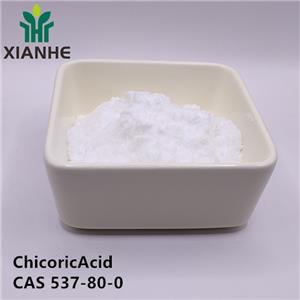
Chicoric Acid: Definition, Functions, and Applications
Definition: Chicoric Acid is a naturally occurring polyphenolic compound primarily found in plants like Cichorium intybus (chicory) and Echinacea purpurea. It is renowned for its antioxidant and anti-inflammatory properties, making it an essential ingredient for various industries.
Functions: Chicoric Acid offers a range of beneficial functions, including:
· Powerful antioxidant properties that help neutralize free radicals.
· Anti-inflammatory effects that support overall health and well-being.
· Enhances the stability and shelf-life of products.
Applications: Chicoric Acid is widely used in the following sectors:
· Pharmaceuticals: For its therapeutic effects, especially in anti-inflammatory and immune-boosting formulations.
· Cosmetics: Incorporated in skincare products due to its antioxidant and anti-aging properties.
· Food and Beverage: Used as a natural additive for its health benefits and to improve product stability.
· Nutraceuticals: As a key ingredient in dietary supplements promoting overall health.