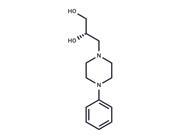
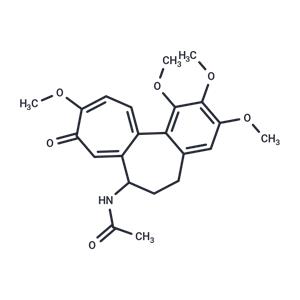
| Name | Colchicine |
| Description | Colchicine (Colcin) is a natural product that is an inhibitor of microtubule polymerization (IC50=3 nM) and blocks microtubule polymerization by binding to microtubule proteins. Colchicine can be used in the treatment of ventilation and rheumatic diseases. |
| Animal Research | a C57BL/6 background are used. To examine the effects of Colchicine on NSAID-induced small intestinal injury, vehicle or Colchicine (1 or 3 mg/kg) is administered orally 30 min prior to indomethacin administration. Mice received intraperitoneal injections of sterilized phosphate buffered saline or mouse recombinant IL-1β (0.1 μg/kg) 3 h after indomethacin treatment. Vehicle or Colchicine (1 or 3 mg/kg) is also administered to NLRP3?/? mice before indomethacin administration. The lesion index is evaluated 24 h after indomethacin administration and examined mRNA and protein expression of inflammasome components 6 h after indomethacin administration. |
| In vitro | METHODS: Human pharyngeal carcinoma cells FaDu and SNU1041 were treated with Colchicine (0.0-1 μM) for 24-72 h. Cell viability was measured by XTT assay.
RESULTS: Colchicine treatment was cytotoxic to both FaDu and SNU1041 cell lines in a dose- and time-dependent manner. [1]
METHODS: Chorionic villous cells AFCs and amniotic fluid cells CVCs were treated with Colchicine (0.15 μg/mL) for 3-24 h. Apoptosis was detected by Flow Cytometry.
RESULTS: Colchicine induced a significant increase in the proportion of annexin V and PI double positive cells. [2] |
| In vivo | METHODS: To investigate the antitumor activity, Colchicine (0.1 mg/kg) was orally administered to BALB/c-nu mice bearing the human pharyngeal cancer tumor FaDu every two days for fourteen days.
RESULTS: Colchicine was effective in inhibiting tumor growth in a hypopharyngeal cancer model nude mouse without serious complications. [1]
METHODS: To investigate the effect of anti-Fas antibody-induced lethality, Colchicine (2 mg/kg) was injected intraperitoneally into C57BL/6 mice, followed by Jo2 antibody (10 μg) 24 h later.
RESULTS: All mice treated with Colchicine survived the lethal attack.Colchicine reduced the susceptibility of mice to the lethal effect of Jo2 against Fas antibody. [3] |
| Storage | keep away from direct sunlight | Powder: -20°C for 3 years | In solvent: -80°C for 1 year | Shipping with blue ice. |
| Solubility Information | DMSO : 1.51 mg/mL (3.78 mM), Sonication is recommended.
H2O : 1.33 mg/mL (3.34 mM), Sonication is recommended.
|
| Keywords | MicrotubuleAssociated | Microtubule/Tubulin | Microtubule Associated | microtubule | Inhibitor | inhibit | Colchicine | Autophagy | Apoptosis |
| Inhibitors Related | Stavudine | Sodium 4-phenylbutyrate | L-Ascorbic acid | Hydroxychloroquine | Guanidine hydrochloride | L-Glutamic acid | Tributyrin | Valproic Acid | Paeonol | Naringin | L-Ascorbic acid sodium salt | Gefitinib |
| Related Compound Libraries | Anti-Tumor Natural Product Library | Traditional Chinese Medicine Monomer Library | Drug Repurposing Compound Library | Natural Product Library | Anti-Inflammatory Traditional Chinese Medicine Compound Library | Microtubule-Targeted Compound Library | FDA-Approved Drug Library | Bitter Compound library | Anti-Aging Compound Library | Ancient Chinese Classical Formulas Compound Library | Food as Medicine Compound Library | Anti-Cancer Drug Library |


 United States