Product Number: L052007A
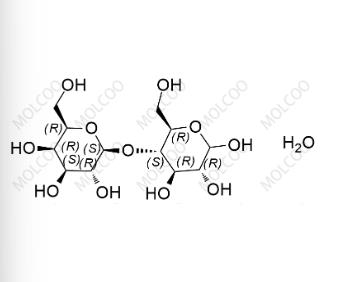
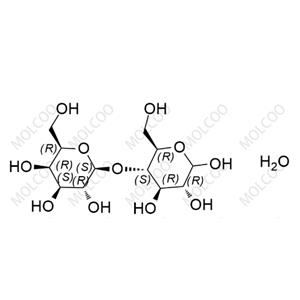
English Name: D-Lactose monohydrate
English Alias: (3R,4R,5S,6R)-6-(hydroxymethyl)-5-(((2S,3R,4S,5R,6R)-3,4,5-trihydroxy-6-(hydroxymethyl)tetrahydro-2H-pyran-2-yl)oxy)tetrahydro-2H-pyran-2,3,4-triol hydrate
CAS Number: None
Molecular Formula: C₁₂H₂₂O₁₁·H₂O
Molecular Weight: 360.32
As the monohydrate form of D-lactose, it has the following advantages:
High stability and crystallinity, ensuring stable physical properties (such as fluidity and compressibility) when used as an excipient in the pharmaceutical field;
Purity meeting pharmacopoeia standards, suitable for injectables, oral preparations, etc., with strict excipient quality requirements;
The monohydrate structure can regulate drug release rate, and its low hygroscopicity reduces the impact of moisture during preparation storage.
Pharmaceutical Excipients: As a diluent or binder for tablets and capsules, or as a carrier for lyophilized powder injections to improve drug processing performance;
Microbiological Culture Media: Providing a carbon source for bacteria, fungi, etc., commonly used in biopharmaceutical production and laboratory research;
Food Industry: Added as a sweetener or stabilizer to dairy products and baked goods to enhance taste and shelf life;
Analytical Reference Standard: Used for detecting the purity and moisture content of lactose-related products by methods such as HPLC.
D-Lactose is a disaccharide composed of glucose and galactose linked by a β-1,4 glycosidic bond, and the monohydrate form is its most common crystalline form. In the pharmaceutical industry, lactose is one of the most widely used excipients due to its high safety, low cost, and good compatibility. The crystal structure of its monohydrate determines that it is not easily broken during tableting, maintaining good formability, so it is widely used in solid preparation production.
Current research focuses on:
Crystal Form Optimization: Preparing specific crystal forms of lactose monohydrate by controlling crystallization conditions (such as temperature, pH value) to improve its fluidity and compressibility;
Hypoallergenic Research: Developing low-lactose or lactose-free excipient alternatives for lactose-intolerant populations;
Analytical Method Improvement: Using rapid detection technologies such as near-infrared spectroscopy (NIRS) to achieve real-time quality monitoring of lactose monohydrate;
Biodegradability: Exploring the degradation pathway of lactose monohydrate in the environment to provide a basis for the development of environmentally friendly excipients.





 China
China