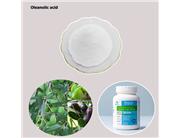
What is Dehydroabietic Acid?
Dehydroabietic acid (DHAA) is a naturally occurring diterpenoid carboxylic acid. It is not found in significant quantities in nature as a free acid but is primarily derived from rosin (also known as colophony), a solid form of resin obtained from coniferous trees like pines.
It is produced during the chemical processing of rosin, where the more common abietic-type acids are dehydrogenated and aromatized. This process creates a compound with a stable, aromatic (phenanthrene) ring structure, which is significantly more stable and less prone to oxidation than its precursors.
Primary Applications and Uses
The applications of dehydroabietic acid leverage its chemical stability, hydrophobic nature, and biological activity. It is primarily an industrial intermediate and a source of innovation in green chemistry.
1. Chemical Synthesis and Industrial Intermediates (Most Significant Application)
This is the dominant use of DHAA. Its robust and rigid molecular structure makes it a valuable chiral pool starting material for synthesizing more complex compounds.
Surfactants and Dispersants: It is used to synthesize rosin soaps (e.g., sodium or potassium salts) which are used as emulsifiers in the production of synthetic rubber (e.g., SBR) and as sizing agents in the paper industry to make paper water-resistant.
Plasticizers and Stabilizers: Its esters are investigated as plasticizers and stabilizers for polymers like PVC and polylactic acid (PLA), offering a more bio-based alternative to phthalates.
Synthesis of Specialty Chemicals: Its functional groups (carboxylic acid and aromatic ring) can be chemically modified to create a wide range of derivatives, including:
2. Antimicrobial and Biocidal Agents
Dehydroabietic acid and its derivatives exhibit notable biological activity.
Antibacterial & Antifungal Agents: It shows effectiveness against a range of bacteria (including antibiotic-resistant strains like MRSA) and fungi. Research focuses on modifying its structure to create new, more potent antimicrobial agents for use in:
Disinfectants and sanitizers.
Preservatives for cosmetics, wood, and coatings to prevent microbial degradation.
Pesticides and Herbicides: Some derivatives have shown insecticidal and phytotoxic (plant-killing) properties, making them candidates for the development of bio-based agrochemicals.
3. Pharmaceuticals and Biomedical Research
This is a promising area of active research, though not yet a large-scale commercial application.
Anti-inflammatory Activity: Studies indicate that DHAA can inhibit the production of nitric oxide (NO) and prostaglandin E2 (PGE2), key mediators of inflammation. This suggests potential for developing new anti-inflammatory drugs.
Anticancer Research: Some laboratory studies (in vitro) have shown that DHAA and its synthetic derivatives can induce apoptosis (programmed cell death) in certain cancer cell lines. However, this is still in the early research stage.
Antiviral Activity: There is emerging research into its potential activity against certain viruses.
4. Material Science
Corrosion Inhibitors: DHAA adsorbs onto metal surfaces (like mild steel), forming a protective film that acts as an effective corrosion inhibitor in acidic environments. This is valuable for industrial cleaning and pickling processes.
Adhesives and Tackifiers: While rosin itself is a classic tackifier (a component that adds stickiness) for adhesives and tapes, DHAA's stability makes its derivatives particularly useful in high-performance formulations.


 China
China