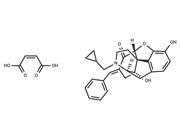
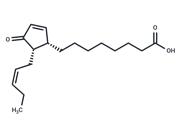
| Name | Doxapram |
| Description | Doxapram (Dopram) is a respiratory stimulant that inhibits TASK-1, TASK-3, and TASK-1/TASK-3 heterodimer channels and is used to study ventilatory failure caused by apnea of prematurity and exacerbation of chronic obstructive pulmonary disease. |
| In vitro | Doxapram inhibits TASK-1 (EC50=410 nM), TASK-3 (EC50=37 μM), TASK-1/TASK-3 (EC50=9 μM) heterodimeric channel function. Doxapram also evoked 3H overflow in a concentration dependent manner, and Doxapram-evoked release was inhibited by the Ca2+ channel blocker nifedipine (5 mM). [1]
Doxapram (1-100 mM) caused rapid, reversible and dose-dependent inhibitions of K+ currents recorded in type I cells (IC50=13 mM). Doxapram was also seen to directly inhibit Ca(2+)-independent K+ currents. Doxapram was a more potent inhibitor of the Ca(2+)-activated K+ currents recorded under control conditions. [2] |
| Storage | store at low temperature | Powder: -20°C for 3 years | In solvent: -80°C for 1 year | Shipping with blue ice. |
| Solubility Information | Ethanol : 50 mg/mL (132.1 mM), Sonication is recommended.
10% DMSO+40% PEG300+5% Tween 80+45% Saline : 2 mg/mL (5.28 mM), Sonication is recommended.
DMSO : 50 mg/mL (132.1 mM), Sonication is recommended.
|
| Keywords | TASK-3 | TASK-1 | PotassiumChannel | Potassium Channel | Doxapram |
| Inhibitors Related | Minoxidil sulfate | Tannic acid | Hydrochlorothiazide | 1,8-Cineole | Tetraethylammonium bromide | Ursodeoxycholic acid | Minoxidil | Chlorzoxazone | Taurocholic acid sodium salt hydrate | Indapamide | Glimepiride | Branaplam hydrochloride |
| Related Compound Libraries | FDA-Approved & Pharmacopeia Drug Library | Bioactive Compound Library | Approved Drug Library | Membrane Protein-targeted Compound Library | Multi-Target Compound Library | Drug Repurposing Compound Library | FDA-Approved Drug Library | Bioactive Compounds Library Max | Ion Channel Targeted Library | Human Metabolite Library | NMPA-Approved Drug Library |



 United States