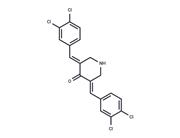
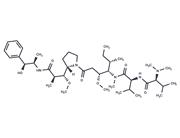
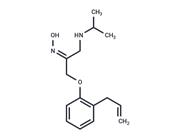
| Name | (E)-Guggulsterone |
| Description | (E)-Guggulsterone is an isomer of guggulsterone. As an FXR antagonist, it reduces blood lipids, induces heme oxygenase-1 expression, blocks DENV NS2B/3B activity, and inhibits DENV replication. |
| In vitro | In human mammary epithelial MCF10A cells, (E)-Guggulsterone (5–25 μM, 0–12 h) activated the Nrf2 signaling pathway, induced HO-1 expression, and led to a moderate accumulation of intracellular reactive oxygen species (ROS)[1].
In Huh-7 cells, (E)-Guggulsterone (0–20 μM, 3 days) exerted potent anti-dengue virus (DENV) activity via activation of the Nrf2/HO-1 pathway and restoration of the antiviral interferon response[2].
(E)-Guggulsterone (3.2 mM, 24 h) exhibited antibacterial activity against both Gram-positive and Gram-negative bacteria (Bacillus subtilis, Staphylococcus aureus, Pseudomonas aeruginosa), with inhibition zone diameters of 14 mm, 14 mm, and 11 mm, respectively[3].
In murine and human hepatocytes, (E)-Guggulsterone (1–20 μM) selectively activated estrogen receptor α (Erα) without activating other ERα isoforms, thereby inducing the expression of Cyp3a11 and CYP3A4[4].
(E)-Guggulsterone (5–20 μM) inhibited Cu²⁺-mediated low-density lipoprotein (LDL) lipid peroxidation and reactive oxygen species generation, effectively blocking both enzymatic and non-enzymatic lipid peroxidation processes[6].
(E)-Guggulsterone displayed high plasma protein binding (>96%) in humans, monkeys, rabbits, and rats, and could promote the oxidative metabolism of liver microsomes[7].
(E)-Guggulsterone showed moderate inhibitory effects on CYP2C19, CYP2C8, CYP2C9, and CYP2B6, with half-maximal inhibitory concentrations (IC₅₀) of 2.1, 6.0, 19, and 22 μM, respectively; whereas it exerted weak inhibition on CYP1A2, CYP2A6, CYP2D6, CYP2E1, and CYP3A4 (IC₅₀ > 50 μM)[7]. |
| In vivo | In the mouse dengue fever virus (DENV) infection model, (E)-Guggulsterone (5-10 mg/kg, orally administered once on days 1, 3, and 5 post-infection) significantly improved infection-related symptoms [2].
In the rat myocardial ischemia model, (E)-Guggulsterone (50 mg/kg, orally administered once daily for 5 consecutive days) markedly improved biochemical indicators in serum and myocardial tissue [6]. |
| Storage | keep away from direct sunlight,keep away from moisture | Powder: -20°C for 3 years | In solvent: -80°C for 1 year | Shipping with blue ice/Shipping at ambient temperature. |
| Solubility Information | DMF:PBS (pH 7.2) (1:4) : 0.2 mg/mL (0.64 mM), Sonication is recommended.
DMSO : 20 mg/mL (64.01 mM), Sonication is recommended.
DMF : 10 mg/mL (32.01 mM), Sonication is recommended.
Ethanol : 1 mg/mL (3.2 mM), Sonication is recommended.
|
| Keywords | Guggulsterone | (E)Guggulsterone | (E) Guggulsterone |
| Inhibitors Related | Ethoxyquin | Kaolin | Allopurinol | Phenytoin sodium | Ethyl linoleate | Magnesium acetate tetrahydrate | Inosine | L-Cystine | Copper Sulfate Pentahydrate | Thymidine | L-Ascorbic acid sodium salt | Dimethyl phthalate |
| Related Compound Libraries | Nuclear Receptor Compound Library | Bioactive Compound Library | Anti-Viral Compound Library | Lipid Metabolism Compound Library | Immunology/Inflammation Compound Library | Bioactive Compounds Library Max |



 United States