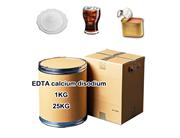
EDTA K₂ (ethylenediaminetetraacetic acid dipotassium salt) is a widely used chelating agent, primarily valued for its ability to tightly bind (sequester) divalent and trivalent metal ions (like Ca²⁺, Mg²⁺, Fe²⁺/³⁺, Zn²⁺, Cu²⁺, Mn²⁺). Its potassium salt form offers good solubility in water. Here are its key applications:
Clinical & Diagnostic Laboratories - Anticoagulant:
Primary Use: EDTA K₂ is the most common anticoagulant in lavender/purple-top blood collection tubes used for hematology testing (CBC - Complete Blood Count).
Mechanism: It irreversibly chelates calcium ions (Ca²⁺), which are essential cofactors in the coagulation cascade. By removing calcium, it prevents blood from clotting in vitro, preserving blood cells in their near-natural state for accurate cell counting and morphology assessment.
Why K₂? The potassium salt is highly soluble and effective at the concentrations needed. EDTA K₂ is often preferred over EDTA K₃ for some automated hematology analyzers due to potential dilution effects with liquid K₃.
Cell Culture & Tissue Dissociation:
Molecular Biology & Biochemistry:
Nuclease Inhibition: Chelates Mg²⁺ and Mn²⁺ ions, which are essential cofactors for many DNases and RNases. Adding EDTA to buffers helps protect DNA and RNA from degradation during isolation, purification, and storage (e.g., TE Buffer: Tris + EDTA).
Enzyme Inhibition: Inhibits metalloenzymes that require metal cofactors (e.g., some phosphatases, proteases).
Removing Metal Contaminants: Used in buffers and solutions to prevent metal-catalyzed degradation of biomolecules or interference in sensitive assays (e.g., PCR, enzymatic reactions).
Clinical Chemistry & Diagnostic Assays:
Used as an additive in some blood collection tubes (e.g., royal blue-top for trace metal analysis) to prevent clotting and stabilize trace elements.
Included in reagent formulations to chelate interfering metal ions that could affect colorimetric or enzymatic reactions.
Used in some urine preservatives.
Industrial & Miscellaneous Applications:
Food Preservation: Sometimes used to chelate metal ions (like Fe, Cu) that catalyze lipid oxidation and rancidity, or promote color/flavor degradation. Also prevents metal-catalyzed reactions that cloud soft drinks.
Cleaning Solutions: Removes scale and metal ion deposits (e.g., Ca²⁺, Mg²⁺ in hard water scale, Fe³⁺ rust stains) in industrial, laboratory, and household cleaners.
Cosmetics & Personal Care: Acts as a stabilizer/chelator in shampoos, soaps, and lotions to prevent spoilage caused by metal ions and to improve foaming/lathering.
Textile & Paper Processing: Prevents metal ion interference in bleaching and dyeing processes.
Agriculture: Used in some micronutrient fertilizers to keep metals soluble and bioavailable, and in some herbicide formulations.


 China
China