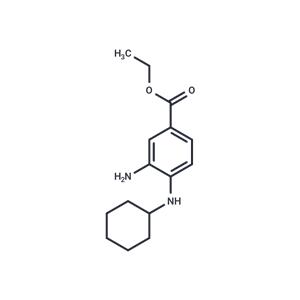
| Name | Ferrostatin-1 |
| Description | Ferrostatin-1 (Fer-1) is a potent and selective inhibitor of iron death. Ferrostatin-1 potently inhibits Erastin-induced iron death in HT-1080 cells with an EC50 of 60 nM. Ferrostatin-1 also exhibits antioxidant and antifungal activities. |
| Cell Research | Cell viability was typically assessed in 384-well format by Alamar Blue fluorescence (ex/em 530/590) measured on a Victor3 plate reader. In some experiments, Trypan Blue dye exclusion counting was performed using an automated cell counter. Cell viability under test conditions is reported as a percentage relative to the negative control treatment [1]. |
| In vitro | METHODS: Human bronchial epithelial cells BEAS-2B were co-treated with LPS (10 mg/L) and Ferrostatin-1 (2 μM) for 16 h. The growth inhibition of the cells was detected by CCK-8 method.
RESULTS: Ferrostatin-1 attenuated the LPS-induced cell damage. [1]
METHODS: Human fibrosarcoma cells HT-1080 were treated with Ferrostatin-1 (0.5 μM) and Erastin (10 μM) for 4 h, and ROS levels produced by the cells were measured by Flow Cytometry.
RESULTS: Ferrostatin-1 inhibited the Erastin-induced accumulation of cytoplasmic and lipid ROS. [2]
METHODS: Mouse hippocampal neuronal cells HT-22 were treated with Ferrostatin-1 (3-12 μM) for 16 h, then treated with 5 mM glutamate for 24 h, and then LDH release was measured.
RESULTS: The release of LDH was significantly increased by treatment with glutamate, and the release of LDH was inhibited by Ferrostatin-1 treatment. [3] |
| In vivo | METHODS: To investigate whether iron death is associated with LPS-induced acute kidney injury (AKI), Ferrostatin-1 (5 mg/kg) was administered intraperitoneally in a single dose to C57BL/6 mice, and infectious AKI was induced by intraperitoneal injection of LPS (10 mg/kg) 30 min later.
RESULTS: Ferrostatin-1 significantly protected mice from renal dysfunction and tubular injury in LPS-induced AKI. [4]
METHODS: To investigate whether iron disorders are associated with acute liver disease and its molecular mechanism, Ferrostatin-1 (2.5 μM/kg) was intraperitoneally injected into ICR mice once a day for three days, followed by intraperitoneal injection of TAA (250 mg/kg/day) for three consecutive days, to establish an acute liver injury (ALI) model in mice.
RESULTS: Ferrostatin-1 pretreatment significantly reduced TAA-induced changes in plasma ALT, AST and LDH levels, inhibited the expression of TfR1, Fpn and Ft-L proteins, and decreased iron accumulation without affecting the expression of xCT or GPX4 in the liver. Ferrostatin-1 prevents hepatic iron by decreasing death. [5] |
| Storage | Shipping with blue ice/Shipping at ambient temperature. |
| Solubility Information | Ethanol : 26.2 mg/mL (99.87 mM), Sonication is recommended.
10% DMSO+40% PEG300+5% Tween 80+45% Saline : 20 mg/mL (76.23 mM), Suspension.
DMSO : 237.5 mg/mL (905.28 mM), Sonication is recommended.
|
| Keywords | ROS | neurotoxicity | Inhibitor | inhibit | Fungal | Ferrostatin-1 | Ferrostatin1 | Ferroptosis | Fer-1 | Fer1 | Fer 1 | death | cytosolic | cell | antioxidant | antifungal |
| Inhibitors Related | Calcium Propionate | Dehydroacetic acid sodium | Hemin | Benzyl propionate | Terbinafine hydrochloride | L-Glutamic acid | Sodium formate | Magnesium acetate tetrahydrate | Geraniol | L-Cystine | L-Glutamine | Sodium Molybdate |
| Related Compound Libraries | Ferroptosis Compound Library | Apoptosis Compound Library | Bioactive Compound Library | Anti-Fungal Compound Library | Antioxidant Compound Library | Inhibitor Library | NO PAINS Compound Library | Anti-Aging Compound Library | Bioactive Compounds Library Max | Anti-Infection Compound Library | Anti-Metabolism Disease Compound Library | Oxidation-Reduction Compound Library |


 United States