Synonym
Claudin-18.1, CLDN18, Claudin-18
Source
Human Claudin-18.1 Full Length Protein (VLP) (CL1-H52P3) is expressed from human 293 cells (HEK293). It contains AA Met 1 - Val 261 (Accession # P56856-1).
Predicted N-terminus: Met 1
Molecular Characterization
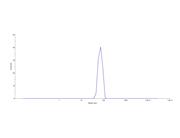
Virus-like particles(VLPs) are formed by self-assembly of capsid proteins from viruses. Membrane Proteins can be constituted in-situ with VLPs produced from HEK293 cell cultures. These VLPs concentrate conformationally intact membrane proteins directly on the cell surface and produce soluble, high-concentration proteins perfect for immunization and antibody screening.

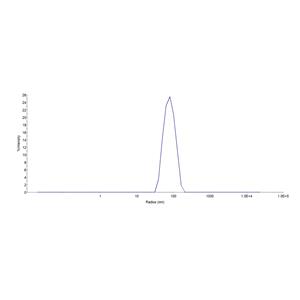
The VLPs provide the display of properly folded membrane proteins in their native cellular membrane in a compact size of 100~300 nm diameter (similar to the size of most viruses) making it optimal targets for dendritic cells in vivo and surface attachment for phage display.
Endotoxin
Less than 1.0 EU per μg by the LAL method / rFC method.
Purity
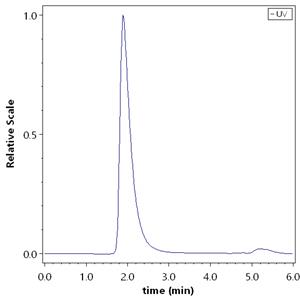
>95% as determined by SEC-HPLC.
Formulation
The VLPs are highly immunogenic, so the immunization strategy should be optimized (antigen dose, regimen and adjuvant).
Supplied as 0.2 μm filtered solution in PBS, Arginine, pH7.4 with trehalose as protectant.
Contact us for customized product form or formulation.
Shipping
This product is supplied and shipped with dry ice, please inquire the shipping cost.
Storage
Please avoid repeated freeze-thaw cycles.
This product is stable after storage at:
The product MUST be stored at -70°C or lower upon receipt;
-70°C for 12 months under sterile conditions.
Background
This gene encodes a member of the claudin family. Claudins are integral membrane proteins and components of tight junction strands. Tight junction strands serve as a physical barrier to prevent solutes and water from passing freely through the paracellular space between epithelial or endothelial cell sheets, and also play critical roles in maintaining cell polarity and signal transductions. This gene is upregulated in patients with ulcerative colitis and highly overexpressed in infiltrating ductal adenocarcinomas. PKC/MAPK/AP-1 (protein kinase C/mitogen-activated protein kinase/activator protein-1) dependent pathway regulates the expression of this gene in gastric cells. Alternatively spliced transcript variants encoding different isoforms have been identified. [provided by RefSeq, Jun 2010]


 China
China