Synonym
CD182, CD183, CKR-L2, CMKAR3, GPR9, IP10-R, Mig-R, MigR
Source
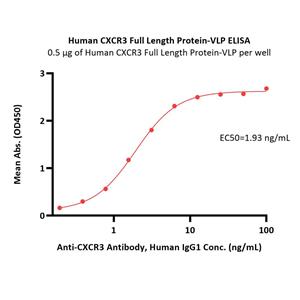
Human CXCR3 Full Length Protein-VLP (CX3-H52P4) is expressed from human 293 cells (HEK293). It contains AA Val 2 - Leu 368 (Accession # P49682-1).
Predicted N-terminus: Asp
Molecular Characterization
Virus-like particles(VLPs) are formed by self-assembly of capsid proteins from viruses. Membrane Proteins can be constituted in-situ with VLPs produced from HEK293 cell cultures. These VLPs concentrate conformationally intact membrane proteins directly on the cell surface and produce soluble, high-concentration proteins perfect for immunization and antibody screening.

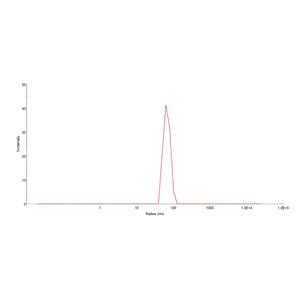
The VLPs provide the display of properly folded membrane proteins in their native cellular membrane in a compact size of 100~300 nm diameter (similar to the size of most viruses) making it optimal targets for dendritic cells in vivo and surface attachment for phage display.
Endotoxin
Less than 1.0 EU per μg by the LAL method / rFC method.
Purity
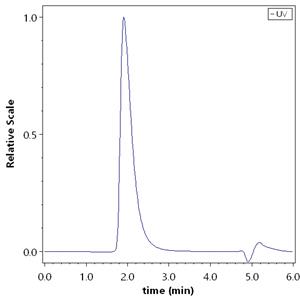
>95% as determined by SEC-HPLC.
Formulation
The VLPs are highly immunogenic, so the immunization strategy should be optimized (antigen dose, regimen and adjuvant).
Supplied as 0.2 μm filtered solution in PBS, Arginine, pH7.4 with trehalose as protectant.
Contact us for customized product form or formulation.
Shipping
This product is supplied and shipped with dry ice, please inquire the shipping cost.
Storage
Please avoid repeated freeze-thaw cycles.
This product is stable after storage at:
The product MUST be stored at -70°C or lower upon receipt;
-70°C for 12 months under sterile conditions.
Background
Chemokines are proteins which induce chemotaxis, promote differentiation of immune cells, and cause tissue extravasation. Given these properties, their role in anti-tumor immune response in the cancer environment is of great interest. Although immunotherapy has shown clinical benefit for some cancer patients, other patients do not respond. One of the mechanisms of resistance to checkpoint inhibitors may be chemokine signaling. The CXCL9, -10, -11/CXCR3 axis regulates immune cell migration, differentiation, and activation, leading to tumor suppression (paracrine axis). However, there are some reports that show involvements of this axis in tumor growth and metastasis (autocrine axis). Thus, a better understanding of CXCL9, -10, -11/CXCR3 axis is necessary to develop effective cancer control.


 China
China