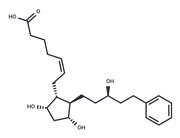
| Name | Latanoprost |
| Description | Latanoprost (Xalatan) is a prostaglandin F2alpha analogue and a prostanoid selective FP receptor agonist with an ocular hypertensive effect. |
| Cell Research | HCS cells were inoculated into a 24-well culture plate (Nunc) and cultured in 10% FBS-DMEM/F12 medium at 37°C in a humidified 5% CO2 incubator. After the cells grew into logarithmic phase, the culture medium of each culture plate well was replaced entirely with the medium containing latanoprost at concentrations varying from 50 mg/l to 0.78125 mg/l, respectively. The cells were cultured under the same condition as described earlier, and their morphology and growth status were monitored every 4 h under an Eclipse TS100 inverted microscope.(Only for Reference) |
| In vitro | Latanoprost functioned as both an indirect activator of AMP-activated protein kinase and a selective retinoid X receptor α (RXRα) antagonist able to selectively antagonise the transcription of a RXRα/peroxisome proliferator-activated receptor γ heterodimer[2]. Latanoprost induced morphological abnormality and viability decline of HCS cells in vitro. It induces cell cycle arrest of HCS cells. Latanoprost induces abnormal changes of plasma membrane, DNA fragmentation and ultrastructural abnormality of HCS cells. Caspase activation in HCS cells is also activated by Latanoprost treatment. Latanoprost induces MTP disruption and quantitative changes of mitochondrion-associated pro-apoptotic regulators in HCS cells[1]. Latanoprost is effective in inhibiting adipogenesis, reducing lipogenesis, promoting fatty acid oxidation and enhancing GLUT4 translocation and glucose uptake both in adipocytes and myotubes[2]. |
| In vivo | Latanoprost, a clinical drug for treating primary open-angle glaucoma and intraocular hypertension, effectively ameliorates glucose and lipid disorders in two mouse models of type 2 diabetes. Its treatment improves glucose tolerance. Chronic administration of latanoprost decreases serum lipids and enhances insulin signalling in white adipose tissue and skeletal muscle. It effectually activates AMPK and regulates glucose and lipid metabolism-relevant genes in diabetic mice[2]. |
| Storage | Pure form: -20°C for 3 years | In solvent: -80°C for 1 year
Shipping with blue ice/Shipping at ambient temperature. |
| Solubility Information | H2O : 125 mg/mL (288.96 mM)
10% DMSO+40% PEG300+5% Tween 80+45% Saline : 1 mg/mL (2.31 mM), Sonication is recommended.
DMSO : 4.33 mg/mL (10.01 mM), Sonication is recommended.
|
| Keywords | RXR | retinoid X receptor α | RAR | prostanoid selective FP receptor | ProstaglandinReceptor | Prostaglandin Receptor | PHXA-41 | PHXA 41 | Latanoprost | Inhibitor | inhibit |
| Inhibitors Related | Pranoprofen | Tranilast | Monomethyl fumarate | Rutin | Pamoic acid disodium | Azathioprine | Ozagrel | Ethamsylate | Benzyl nicotinate | Rebamipide | Lornoxicam | p-Hydroxycinnamic acid |
| Related Compound Libraries | Bioactive Compound Library | Pain-Related Compound Library | Membrane Protein-targeted Compound Library | Anti-Obesity Compound Library | Anti-Cancer Clinical Compound Library | Drug Repurposing Compound Library | Anti-Cancer Approved Drug Library | FDA-Approved Drug Library | Anti-Aging Compound Library | Immunology/Inflammation Compound Library | Bioactive Compounds Library Max | GPCR Compound Library |



 United States