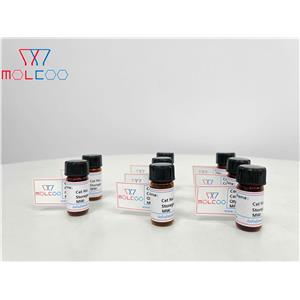
Product Number: L017052
English Name: Lidocaine Impurity 52
English Alias: 2-(diethylamino)-N-(4-hydroxy-2,6-dimethylphenyl)acetamide
CAS Number: 39942-41-1
Molecular Formula: C₁₄H₂₂N₂O₂
Molecular Weight: 250.34
As an impurity reference standard for lidocaine, this compound has a well-defined chemical structure and stable properties, and can be used as a standard substance for drug research, development, and quality control. Its presence helps accurately analyze the by-product formation mechanism of reactions such as acetamide group introduction and hydroxyl substitution during lidocaine synthesis, optimize the production process, and reduce impurity generation. At the same time, it can be used to verify the accuracy and sensitivity of detection methods such as HPLC and LC-MS, ensuring that lidocaine product quality meets standards.
Drug Development: In the research and development of lidocaine and its formulations, it is used as an impurity reference standard for identification and quantitative analysis, determining the impurity profile of drugs and evaluating the purity of active pharmaceutical ingredients and formulations;
Quality Control: As a standard substance, it is used to verify the accuracy and sensitivity of detection methods, ensuring that the content of impurities during production meets pharmacopoeia and regulatory requirements, and guaranteeing drug quality;
Stability Studies: Research on the stability of this impurity under different conditions (such as light, temperature, humidity) provides data support for determining the storage conditions and shelf life of lidocaine.
Lidocaine is a commonly used local anesthetic and antiarrhythmic drug. During its synthesis, due to factors such as reaction conditions and raw material purity, various impurities are inevitably generated, and Lidocaine Impurity 52 is one of them. With the increasing requirements for drug quality and safety in the pharmaceutical industry, strict control of lidocaine impurities has become an important part of ensuring drug quality. Therefore, the research and control of this impurity are of great significance in the quality control system of lidocaine.
Currently, research on Lidocaine Impurity 52 mainly focuses on the optimization of impurity detection methods, improvement of synthesis processes, and toxicological evaluations. Researchers are committed to developing more sensitive and efficient detection technologies, such as ultra-high-performance liquid chromatography-tandem mass spectrometry (UPLC-MS/MS), to achieve trace detection of this impurity. At the same time, they deeply study its synthesis mechanism, reducing impurity generation by optimizing reaction conditions and raw material ratios. In addition, in vitro cell experiments and animal models are used to evaluate the potential toxicity of this impurity, providing a scientific basis for formulating reasonable impurity limit standards and ensuring the safety of lidocaine drugs.



 China
China


