Liothyronine Cas 6893-02-3
Specification
Items | Specifications | Results |
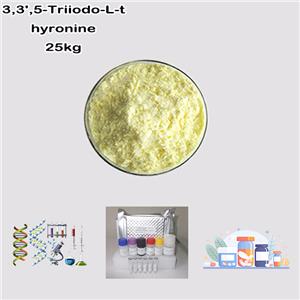
Appearance | Off-white to Gray powder | Complies |
Purity(HPLC) | ≥ 98.0% | 99.2% |
Water Content | ≤ 0.5% | 0.12% |
HNMR | Comply with the structure | Complies |
Conclusion | The product conforms to the Enterprise Standard. |
Attention | For Laboratory use only , not for drug and other uses. |
What is 3,3',5-Triiodo-L-thyronine?
3,3',5-Triiodo-L-thyronine is the full, systematic chemical name for the hormone most commonly known as T3 or liothyronine. It is one of the two primary hormones produced by the thyroid gland, the other being thyroxine (T4).
In simple terms, T3 is the biologically active thyroid hormone that directly influences the metabolism of almost every cell in the body.
Breaking Down the Name
The name describes its precise chemical structure:
Triiodo: Means "three iodine" atoms.
L-thyronine: Refers to the specific, naturally occurring "left-handed" (levorotatory) isomer of the thyronine molecule. The "L" is crucial because the "D" form is biologically inactive.
3,3',5-: These numbers indicate the positions on the thyronine molecule where the three iodine atoms are attached.
This structure is what gives T3 its potent biological activity.
Key Functions and Role in the Body
T3 is a powerhouse hormone that regulates numerous critical bodily functions:
Metabolism: It is the primary regulator of the body's basal metabolic rate (BMR). It controls how quickly the body converts calories and oxygen into energy.
Growth and Development: T3 is absolutely essential for normal growth in children and for the proper development of the central nervous system, especially in the fetal stage and early childhood.
Heart Function: It influences heart rate, cardiac output, and contractility, helping to maintain cardiovascular health.
Brain Function: It affects mood, cognitive speed, and overall brain function. Low levels are often linked to "brain fog" and depression.
Body Temperature: It helps regulate the body's temperature by controlling heat production.
Digestive Function: It influences the speed of digestion and intestinal motility.
Bone Maintenance: It plays a role in the normal turnover and maintenance of bones.
Production and Conversion
The thyroid gland produces hormones in the following ratio:
~80-90% T4 (Thyroxine): This is a "pro-hormone." It has four iodine atoms and is less biologically active. It circulates throughout the body as a reservoir.
~10-20% T3: This is the active form, produced directly by the thyroid.
However, most T3 in the body (about 60%) is created by converting T4 in organs like the liver and kidneys through a process called deiodination. An enzyme removes one specific iodine atom from the "outer ring" of T4, turning it into the active T3.
A small amount of T4 is converted into reverse T3 (rT3), an inactive form that binds to T3 receptors but does not activate them, acting as a natural brake on metabolism.
Clinical Significance
Measuring T3 levels is a critical part of diagnosing and managing thyroid disorders.
Hyperthyroidism (Overactive Thyroid): Conditions like Graves' disease often show elevated levels of Total T3 and Free T3. In some cases, T3 can be high while T4 is normal ("T3 toxicosis").
Hypothyroidism (Underactive Thyroid): T3 levels are often the last to fall and are not the most reliable indicator for primary hypothyroidism. Doctors typically rely on TSH (Thyroid-Stimulating Hormone) and T4 levels for initial diagnosis.
T3 Medication: A synthetic form of T3, called liothyronine sodium (brand names like Cytomel), is sometimes prescribed for hypothyroidism, either alone or in combination with T4 medication (levothyroxine).
Summary Table
| Aspect | Description |
|---|
| Common Name | T3 |
| Full Name | 3,3',5-Triiodo-L-thyronine |
| Origin | Directly secreted by the thyroid gland and converted from T4 in peripheral tissues. |
| Primary Role | Biologically active thyroid hormone that regulates metabolism, growth, and development. |
| Potency | 3-4 times more potent than T4 (Thyroxine). |
| Clinical Use | Key marker for diagnosing hyperthyroidism; available as a medication (liothyronine) for hypothyroidism treatment. |
In conclusion, 3,3',5-Triiodo-L-thyronine (T3) is the potent, active form of thyroid hormone that acts as a master regulator of your body's metabolism and energy levels.
Welcome to contact with us to get more information.
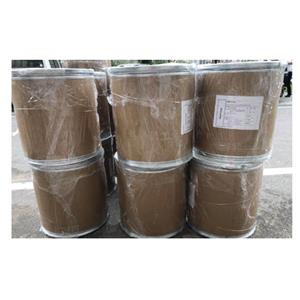
Packages

Delivery

Payment term
* Wire Transfer/Telegraphic Transfer
* Western Union
* MoneyGram
* L/C
Contact information
Spring Zhang
Email: export@fortunachem.com
Skype: Fortunachem201304
QQ:3169620873
Tel: +86-27-59207892
Website: www.fortunachem.com




 China
China