


1/4
Liposomal BAICALEIN
- Min. Order1kg
- Purity5%
- Cas No491-67-8
- Supply Ability1 Ton
- Update time2026-02-14

 China
China
Since:2015-03-23
Address:East Side, 7th Floor, Building 6, No. 1366 Hongfeng Road


| Product Name | Liposomal BAICALEIN |
| CAS No | 491-67-8 |
| EC-No | |
| Min. Order | 1kg |
| Purity | 5% |
| Supply Ability | 1 Ton |
| Release date | 2026/02/14 |
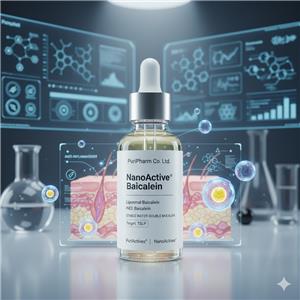
PuriPharm Co. Ltd.
NanoActive Baicalein
Liposomal Baicalein
INCI: Baicalein
Stable Water-Soluble Baicalein
Target: TSLP (Thymic Stromal Lymphopoietin)
PuriActives ® | NanoActive ®
1. Product Overview
NanoActive Baicalein represents a groundbreaking advancement in cosmetic active ingredient technology, masterfully combining the powerful bioactive properties of baicalein with state-of-the-art liposomal delivery systems. This innovative formulation addresses the fundamental challenges associated with traditional baicalein preparations, including poor water solubility, limited skin penetration, and susceptibility to oxidation. Through our proprietary nanoencapsulation technology, we have successfully transformed this remarkable flavonoid compound into a stable, water-soluble, and highly bioavailable ingredient suitable for a wide range of cosmetic and personal care applications.
Baicalein (5,6,7-trihydroxyflavone) is a naturally occurring flavonoid compound primarily found in the roots of Scutellaria baicalensis Georgi (Chinese skullcap), a plant with a rich history of use in traditional medicine spanning thousands of years. Modern scientific research has extensively validated the remarkable therapeutic properties of baicalein, demonstrating its potent anti-inflammatory, antioxidant, anti-allergic, and skin-protective activities. However, the practical application of baicalein in cosmetic formulations has been significantly limited by its inherent physicochemical properties, particularly its extremely low water solubility and poor stability in aqueous environments.
The NanoActive series from PuriPharm addresses these challenges through innovative liposomal encapsulation technology. Our advanced delivery system encapsulates baicalein molecules within nanoscale phospholipid vesicles, creating a protective microenvironment that shields the sensitive active compound from degradation while dramatically enhancing its solubility and skin penetration characteristics. The result is a revolutionary ingredient that delivers the full therapeutic potential of baicalein in a format ideally suited for modern cosmetic formulations.
2. Key Features and Technology
2.1 Advanced Liposomal Delivery System
Our proprietary liposomal encapsulation technology represents the culmination of years of research and development in nanotechnology and drug delivery systems. The liposomes used in NanoActive Baicalein are composed of high-purity phospholipids that form stable, nanoscale vesicles with diameters typically less than 200 nanometers. This microscopic size enables efficient penetration through the stratum corneum, the outermost layer of the skin, allowing the encapsulated baicalein to reach the viable epidermis and dermis where it can exert its therapeutic effects.
The liposomal carrier system provides multiple advantages beyond enhanced penetration. The phospholipid bilayer creates a protective barrier that shields the encapsulated baicalein from environmental factors that could cause degradation, including light exposure, oxidation, and hydrolysis. This protection extends throughout the manufacturing process, storage period, and application to the skin, ensuring that the active ingredient maintains its potency and efficacy. Furthermore, the liposomal structure mimics the natural cell membrane composition, enhancing biocompatibility and reducing the potential for skin irritation or adverse reactions.
2.2 TSLP Targeting Mechanism
Thymic Stromal Lymphopoietin (TSLP) has emerged as a critical cytokine in the pathogenesis of various inflammatory and allergic skin conditions. Produced primarily by epithelial cells including keratinocytes, TSLP acts as a master regulator of type 2 immune responses, initiating and amplifying inflammatory cascades that underlie conditions such as atopic dermatitis, allergic contact dermatitis, and psoriasis. The pivotal role of TSLP in skin inflammation makes it an attractive therapeutic target for addressing the root causes of these conditions rather than merely managing symptoms.
NanoActive Baicalein specifically targets TSLP expression and signaling through multiple mechanisms. Research has demonstrated that baicalein effectively suppresses TSLP production in keratinocytes by inhibiting the activation of NF-κB and MAPK signaling pathways, which are key regulators of TSLP gene expression. Additionally, baicalein modulates downstream signaling events, reducing the activation and recruitment of inflammatory cells that mediate tissue damage and symptom development. This dual-action approach, targeting both TSLP production and its downstream effects, provides comprehensive anti-inflammatory and anti-allergic benefits.
2.3 Superior Stability and Solubility
Traditional baicalein formulations face significant stability challenges that limit their practical application in cosmetic products. The compound's poor water solubility (less than 0.1 mg/mL at neutral pH) necessitates the use of organic solvents or complex solubilization systems that may compromise formulation integrity or cause skin irritation. Furthermore, baicalein is susceptible to oxidation and photodegradation, leading to loss of activity and potential formation of undesirable degradation products.
NanoActive Baicalein overcomes these limitations through innovative nanoencapsulation technology. The liposomal carrier system transforms the poorly soluble baicalein into a stable, water-soluble formulation that can be easily incorporated into aqueous cosmetic systems without the need for additional solubilizers or organic solvents. The phospholipid bilayer provides a protective microenvironment that shields the sensitive baicalein molecule from oxidation, light exposure, and hydrolysis, ensuring consistent potency throughout the product shelf life. Stability studies have demonstrated that NanoActive Baicalein maintains greater than 95% of its initial active content after 24 months of storage under recommended conditions.
3. Key Benefits
3.1 Anti-Inflammatory Action
Baicalein exhibits potent anti-inflammatory properties through multiple complementary pathways. The primary mechanism involves inhibition of TSLP expression and downstream signaling, effectively interrupting the inflammatory cascade at its source. Clinical studies have demonstrated significant reductions in inflammatory markers and visible improvement in inflammatory skin conditions following treatment with baicalein-containing formulations. The compound also inhibits NF-κB activation, a central regulator of inflammatory gene expression, and reduces the production of pro-inflammatory cytokines including IL-4, IL-5, IL-13, and TNF-α.
The anti-inflammatory effects of NanoActive Baicalein extend beyond cytokine modulation. Research has shown that baicalein inhibits the activity of cyclooxygenase-2 (COX-2) and inducible nitric oxide synthase (iNOS), enzymes that contribute to inflammatory mediator production. Additionally, baicalein suppresses the expression of adhesion molecules on endothelial cells, reducing the recruitment of inflammatory cells to sites of skin inflammation. These multifaceted anti-inflammatory actions make NanoActive Baicalein particularly valuable for formulations targeting sensitive, reactive, or inflamed skin conditions.
3.2 Anti-Allergic Properties
The targeted inhibition of TSLP makes NanoActive Baicalein particularly effective against allergic skin reactions. TSLP is recognized as the "master switch" for allergic inflammation, initiating the cascade of events that lead to allergic sensitization and symptom development. By suppressing TSLP expression and signaling, NanoActive Baicalein addresses the fundamental mechanisms underlying allergic skin conditions rather than merely providing symptomatic relief. This approach offers potential for both immediate symptom improvement and long-term modulation of allergic responses.
Beyond TSLP inhibition, baicalein demonstrates additional anti-allergic activities that contribute to its therapeutic efficacy. The compound stabilizes mast cells, reducing their tendency to degranulate and release histamine and other allergic mediators. Studies have shown that baicalein inhibits IgE-mediated mast cell activation and reduces the release of tryptase, prostaglandin D2, and leukotrienes. These effects translate to reduced itching, redness, and swelling in allergic skin conditions, making NanoActive Baicalein an ideal ingredient for formulations targeting atopic dermatitis, contact dermatitis, and other allergic skin manifestations.
3.3 Antioxidant Protection
Baicalein is recognized as one of the most potent natural antioxidants among flavonoid compounds, with exceptional free radical scavenging abilities that exceed those of many conventional antioxidants. The compound's unique molecular structure, featuring three hydroxyl groups on the A-ring of the flavone skeleton, enables efficient electron donation and radical stabilization. This structural feature allows baicalein to neutralize a wide range of reactive oxygen species (ROS) and reactive nitrogen species (RNS), including superoxide anion, hydroxyl radical, peroxyl radical, and peroxynitrite.
The antioxidant activity of NanoActive Baicalein provides comprehensive protection against oxidative stress induced by UV radiation, environmental pollutants, and natural metabolic processes. Research has demonstrated that baicalein effectively protects skin cells from UV-induced DNA damage, lipid peroxidation, and protein oxidation. The compound also upregulates endogenous antioxidant defense systems, including the Nrf2/ARE pathway, enhancing the skin's natural capacity to resist oxidative damage. These antioxidant properties make NanoActive Baicalein valuable for anti-aging formulations, photoprotection products, and general skin health maintenance.
3.4 Skin Barrier Enhancement
NanoActive Baicalein supports the restoration and maintenance of healthy skin barrier function through multiple mechanisms. By reducing inflammation and oxidative damage, the ingredient creates an environment conducive to natural barrier repair processes. Studies have shown that baicalein promotes the synthesis of ceramides and other essential lipids that constitute the extracellular lipid matrix of the stratum corneum. This lipid-enriching effect helps restore barrier integrity and prevents transepidermal water loss (TEWL), a key indicator of barrier dysfunction.
The barrier-enhancing properties of NanoActive Baicalein are particularly beneficial for individuals with compromised skin barriers, sensitive skin, or those recovering from dermatological procedures. Research has demonstrated that baicalein upregulates the expression of filaggrin, involucrin, and loricrin, key structural proteins involved in cornified envelope formation. The compound also modulates tight junction proteins, enhancing the barrier function of the granular layer. These effects contribute to improved skin hydration, reduced sensitivity to environmental irritants, and enhanced overall skin resilience.
4. Technical Specifications
4.1 Physical and Chemical Properties
Parameter | Specification |
INCI Name | Baicalein |
Trade Name | NanoActive Baicalein |
CAS Number | 491-67-8 |
Appearance | Light yellow to yellow liquid |
Solubility | Water-soluble |
Particle Size | < 100 nm |
pH Range | 5.0 - 7.0 |
Odor | Characteristic, mild |
Active Content | ≥ 5% |
Preservatives | None (self-preserving formulation) |
Table 1: Physical and Chemical Properties
4.2 Formulation Guidelines
Parameter | Recommendation |
Recommended Dosage | 0.5% - 3.0% |
Processing Temperature | < 45°C (recommended) |
Compatible Bases | Water-based systems, emulsions, gels, serums |
Addition Phase | Cool-down phase (below 45°C) |
Mixing Method | Gentle stirring; avoid high shear |
Storage Conditions | Cool, dark place (2-25°C) |
Shelf Life | 24 months from manufacture date |
Packaging | Opaque containers recommended |
Table 2: Formulation Guidelines
5. Mechanism of Action: Targeting TSLP
5.1 Understanding TSLP
Thymic Stromal Lymphopoietin (TSLP) is an epithelial cell-derived cytokine belonging to the hematopoietin receptor family. First identified in 1994, TSLP has emerged as a critical regulator of immune responses at barrier surfaces, including the skin, lungs, and gut. In the skin, TSLP is primarily produced by keratinocytes in response to various stimuli including allergens, pathogens, mechanical injury, and inflammatory cytokines. The expression of TSLP is regulated by multiple signaling pathways, including NF-κB, MAPK, and STAT pathways, which are activated by pattern recognition receptors and cytokine receptors.
TSLP acts as a master switch for type 2 immune responses, orchestrating the activation and differentiation of multiple immune cell types. It activates dendritic cells to express costimulatory molecules and produce chemokines that attract T helper 2 (Th2) cells. TSLP-activated dendritic cells prime naive T cells to differentiate into Th2 cells, which produce the signature cytokines IL-4, IL-5, and IL-13. TSLP also directly activates mast cells, promoting their survival and enhancing their responsiveness to IgE-mediated activation. Additionally, TSLP stimulates group 2 innate lymphoid cells (ILC2s), which produce large amounts of Th2 cytokines independently of adaptive immunity.
5.2 TSLP in Skin Disease
Elevated TSLP expression is a hallmark of multiple inflammatory skin conditions. In atopic dermatitis (AD), TSLP levels are significantly increased in lesional skin and correlate with disease severity. TSLP contributes to AD pathogenesis through multiple mechanisms: promoting Th2 polarization, activating mast cells and ILC2s, and directly stimulating sensory neurons to induce itch. The critical role of TSLP in AD has been validated by genetic studies showing that polymorphisms in the TSLP gene are associated with AD susceptibility, and by animal studies demonstrating that TSLP-deficient mice are protected from developing AD-like symptoms.
Beyond atopic dermatitis, TSLP is implicated in the pathogenesis of allergic contact dermatitis, psoriasis, and chronic itch conditions. In allergic contact dermatitis, TSLP is rapidly induced by contact allergens and contributes to the sensitization phase by promoting Th2 responses. In psoriasis, TSLP synergizes with IL-23 to promote Th17 responses, linking type 2 and type 3 inflammation. The involvement of TSLP in diverse skin conditions makes it an attractive therapeutic target with broad applicability across multiple dermatological indications.
5.3 Baicalein's Effects on TSLP Pathway
Baicalein modulates TSLP expression and signaling through multiple mechanisms, providing a comprehensive approach to TSLP-mediated inflammation. Research has demonstrated that baicalein effectively suppresses TSLP gene expression in keratinocytes by inhibiting the activation of NF-κB and MAPK signaling pathways. These pathways are activated by various stimuli including TNF-α, IL-1β, and toll-like receptor ligands, and their inhibition represents a key mechanism for TSLP suppression.
Key mechanisms of baicalein action on TSLP pathway include:
1. Inhibition of IκB kinase (IKK) activity, preventing IκB degradation and NF-κB nuclear translocation
2. Suppression of MAPK pathway activation, including ERK, JNK, and p38 phosphorylation
3. Reduction of Th2 cytokine production (IL-4, IL-5, IL-13) from activated T cells
4. Attenuation of inflammatory cell infiltration and activation in skin tissue
5. Modulation of STAT signaling pathways involved in TSLP receptor signaling
6. Recommended Applications
NanoActive Baicalein is a versatile ingredient suitable for a wide range of cosmetic and personal care formulations. Its unique combination of anti-inflammatory, anti-allergic, antioxidant, and barrier-enhancing properties makes it particularly valuable for products targeting sensitive, reactive, or compromised skin. The following application categories represent key areas where NanoActive Baicalein can deliver significant benefits:
Sensitive Skin Care
Formulations designed for reactive and sensitive skin types benefit from NanoActive Baicalein's ability to reduce inflammation and strengthen the skin barrier. The ingredient's gentle, non-irritating nature makes it suitable for daily use in cleansers, toners, serums, and moisturizers targeting sensitive skin. Recommended concentration: 0.5-1.5%.
Anti-Aging Products
Premium anti-aging serums and creams can leverage baicalein's powerful antioxidant properties to protect against oxidative stress and environmental damage. The ingredient's ability to support collagen synthesis and inhibit matrix metalloproteinases provides additional anti-aging benefits. Recommended concentration: 1.0-2.0%.
Atopic Dermatitis Care
Specialized products for managing atopic dermatitis symptoms benefit from NanoActive Baicalein's targeted TSLP inhibition. The ingredient addresses the underlying inflammatory mechanisms while providing soothing relief from itching and irritation. Recommended concentration: 1.5-3.0%.
Post-Procedure Care
Recovery formulations for skin treatments benefit from NanoActive Baicalein's anti-inflammatory and barrier-repair properties. The ingredient helps reduce post-procedure inflammation, supports healing, and minimizes the risk of complications. Recommended concentration: 1.0-2.0%.
Sun Care Products
After-sun treatments and protective formulations benefit from baicalein's enhanced antioxidant activity. The ingredient helps neutralize UV-induced free radicals and supports the skin's natural repair processes. Recommended concentration: 0.5-1.5%.
Anti-Itch Solutions
Targeted products for pruritus relief benefit from NanoActive Baicalein's ability to modulate TSLP-mediated itch pathways. The ingredient provides relief from itching associated with various skin conditions without the side effects associated with conventional anti-itch agents. Recommended concentration: 1.0-2.5%.
7. Safety and Regulatory Information
NanoActive Baicalein has been extensively evaluated for safety and tolerability. The ingredient is manufactured under strict quality control conditions. Comprehensive safety assessments have demonstrated excellent tolerability across various skin types, including sensitive skin. The liposomal delivery system enhances biocompatibility and minimizes the potential for irritation or adverse reactions.
Regulatory compliance:
• Compliant with EU Cosmetic Regulation (EC) No 1223/2009
• Listed in China IECIC (Inventory of Existing Cosmetic Ingredients in China)
8. About PuriPharm Co. Ltd.
PuriPharm Co. Ltd. is a leading innovator in the development and manufacturing of high-performance active ingredients for the cosmetic and personal care industry. Founded with a vision to bridge the gap between scientific innovation and practical application, we have established ourselves as a trusted partner for cosmetic manufacturers worldwide seeking cutting-edge ingredients that deliver measurable results.
Our commitment to research and development drives continuous innovation in active ingredient technology. We maintain state-of-the-art research facilities staffed by experienced scientists specializing in natural product chemistry, formulation science, and skin biology. This multidisciplinary approach enables us to identify promising bioactive compounds, optimize their delivery and efficacy, and translate scientific discoveries into practical cosmetic solutions.
Our two flagship brand series represent our dedication to excellence across different technology platforms:
PuriActives® - Our PuriActives series focuses on highly purified natural active ingredients derived from botanical sources. These ingredients undergo rigorous extraction and purification processes to ensure maximum potency, consistency, and safety. The PuriActives line represents our commitment to harnessing the power of nature through scientific precision.
NanoActive® - Our NanoActive series leverages advanced delivery technologies including liposomal encapsulation, nanoemulsion, and polymeric nanoparticle systems to maximize the bioavailability and efficacy of active ingredients. The NanoActive line represents our commitment to pushing the boundaries of cosmetic science through innovative delivery solutions.
9. Contact Information
For more information about NanoActive Baicalein or to discuss your specific formulation requirements, please contact our technical team. We offer comprehensive technical support including formulation assistance, stability testing, and efficacy evaluation to ensure successful integration of our ingredients into your products.
Company | PuriPharm Co. Ltd. |
info@puripharm.com | |
Website | www.puripharm.com |
Brands | PuriActives® | NanoActive® |
Table 3: Contact Information
© 2024 PuriPharm Co. Ltd. All rights reserved.
PuriActives® and NanoActive® are registered trademarks of PuriPharm Co. Ltd.
Company Profile Introduction
PuriPharm Co., Ltd. is a science-driven health ingredients company specializing in the R&D, manufacturing, and commercialization of functional bioactives and advanced delivery solutions for global customers. Headquartered in Huzhou, China, with a marketing center in Shanghai, we serve cosmetics & personal care, functional food, and biomedical applications. Backed by strong pharmaceutical and nanomedicine expertise, we have built platform technologies spanning biotechnology, phytoextraction, green chemistry, and innovative formulation. Our core capabilities include nano-delivery systems (e.g., liposomes and nano-emulsions), smart gel systems, transdermal delivery, and bioadhesive delivery—helping brands overcome common formulation challenges such as poor solubility, low stability, and limited bioavailability. Through our signature product lines **PuriActives** and **NanoActive**, we deliver high-performance ingredients and formulation-ready solutions, including advanced vitamin A delivery systems and multifunctional actives for hydration, anti-aging, and acne care. PuriPharm partners with customers worldwide to accelerate innovation with reliable quality, application support, and scalable manufacturing.
You may like