Product Information:
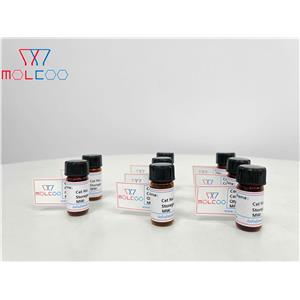
Product Number: L057048
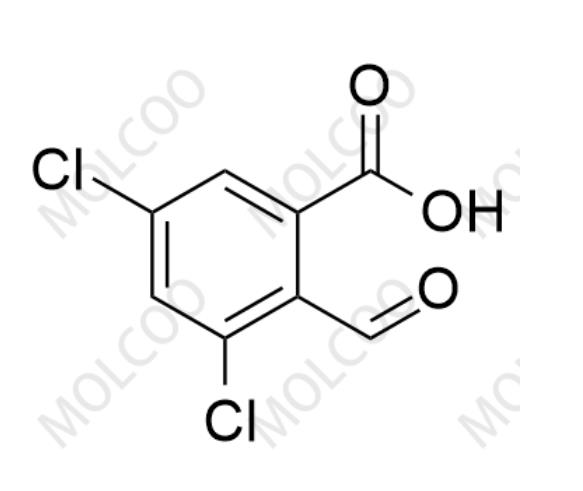
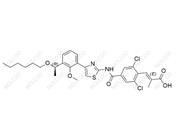
English Name: Lusutrombopag Impurity 48
English Alias: 1367365-00-1 (Ring Closed Form);3,5-dichloro-2-formylbenzoic acid
CAS Number: 2126856-49-1
Molecular Formula: C₈H₄Cl₂O₃
Molecular Weight: 219.02
Advantages:
High-purity standard:HPLC purity ≥99.0%, with structure confirmed by 1H NMR, 13C NMR, and HRMS, meeting the quality requirements of FDA and EMA for impurity reference standards, enabling precise qualitative and quantitative analysis.
Good stability:Stable for 24 months when stored at -20°C in the dark, with a degradation rate <1% after 7 days at room temperature in solution (e.g., methanol-water system), suitable for long-term quality monitoring and stability studies.
Clear impurity characteristics:As a characteristic impurity from ring-closure or halogenation side reactions in lusutrombopag synthesis, it accurately tracks process risks of chlorination or formylation during aromatic ring construction.
Applications:
Pharmaceutical quality control:Used for LC-MS/MS detection of Impurity 48 in lusutrombopag APIs and formulations, controlling its content ≤0.1% in accordance with ICH Q3A standards to ensure compliance with quality requirements for thrombopoietin receptor agonist drugs.
Synthesis process optimization:In ring-closure or halogenation reactions, monitoring impurity content (e.g., adjusting chlorination reaction temperature from 60°C to 40°C to reduce impurity from 0.9% to 0.1%) optimizes reaction conditions to minimize by-product formation.
Analytical method development:Serves as a chlorinated aromatic impurity reference standard for establishing specific detection methods, such as ultra-performance liquid chromatography-ultraviolet detection (UPLC-UV), achieving accurate quantification using characteristic absorption of chlorinated groups (λ=230nm) (limit of quantitation LOQ=0.05μg/mL).
Toxicological research support:Provides samples for evaluating the potential toxicity of chlorinated impurities, facilitating in vitro cytotoxicity tests and in vivo genotoxicity studies to meet regulatory requirements for impurity safety assessment.
Background Description:
Lusutrombopag is an oral thrombopoietin receptor agonist used for treating thrombocytopenia in patients with chronic liver disease. During its synthesis, 3,5-dichloro-2-formylbenzoic acid (Impurity 48) may be generated due to excessive halogenating reagents or uncontrolled ring-closure reaction conditions. The impurity’s aldehyde and chlorinated groups may affect drug stability and metabolic pathways. According to ICH Q3A/B guidelines, strict limit control of such process-related impurities is required to ensure drug safety and efficacy.
Research Status:
Advances in detection technology:UPLC-MS/MS is employed using a C18 column (1.7μm, 2.1×100mm) with 0.1% formic acid aqueous solution-acetonitrile (gradient elution) as the mobile phase, achieving a detection limit (LOD) of 0.01ppm for precise analysis of trace chlorinated impurities.
Formation mechanism research:This impurity mainly originates from excessive chlorination substitution in aromatic ring chlorination reactions or residues of formylating reagents (e.g., N,N-dimethylformamide). Using catalytic amounts of Lewis acids (e.g., aluminum trichloride) and controlling reaction time can reduce impurity formation by over 80%.
Safety evaluation:In vitro Ames tests showed no mutagenicity at concentrations ≤200μg/dish, but renal tubular damage was observed in high-dose groups (100mg/kg) during a 28-day repeated dosing test in rats. Based on toxicological data, a recommended limit of ≤0.08% is proposed.




 China
China