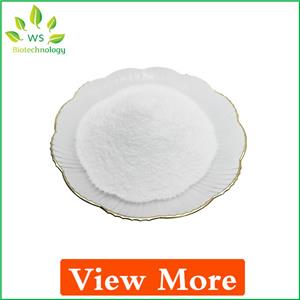
N-Acetyl-D-Phenylalanine is a modified form of the amino acid phenylalanine, where the amino group is acetylated and the molecule is in the D-configuration. It has several potential applications in biochemistry, pharmaceuticals, and research:
1. Peptide Synthesis & Biochemistry
- Used as a building block in the synthesis of modified peptides and peptidomimetics.
- The N-acetyl group enhances stability against enzymatic degradation, making it useful in designing peptide-based drugs.
- The D-configuration can improve resistance to proteolytic breakdown, which is valuable in drug development.
2. Chiral Resolution & Asymmetric Synthesis
- Acts as a chiral auxiliary or resolving agent in asymmetric synthesis.
- Helps separate enantiomers in racemic mixtures due to its distinct stereochemistry.
3. Pharmaceutical Research
- Investigated for potential use in drug formulations where altered peptide structures are needed (e.g., enzyme inhibitors or receptor modulators).
- May be used in prodrug designs to improve bioavailability.
4. Microbial & Enzyme Studies
- Serves as a substrate for studying enzyme specificity (e.g., proteases or acylases that act on N-acetylated or D-amino acids).
5. Neuroscience Research
- Phenylalanine derivatives are studied for their role in neurotransmitter regulation (e.g., dopamine synthesis), though the D-form is less common in natural systems.
6. Cosmetic & Anti-Aging Products
- Some acetylated amino acids are used in skincare for their potential moisturizing or anti-wrinkle effects, though this application is less documented for the D-form.
Note:
Unlike L-phenylalanine (the natural form), D-phenylalanine and its derivatives are not commonly involved in human metabolism but are valuable in synthetic and medicinal chemistry.


 China
China