N-Nitroso Paroxetine
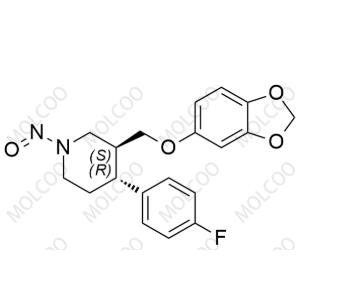
Product Code:N031201
English Name:N-Nitroso Paroxetine
English Alias:(3S,4R)-3-((benzo[d][1,3]dioxol-5-yloxy)methyl)-4-(4-fluorophenyl)-1-nitrosopiperidine
CAS No.:2361294-43-9
Molecular Formula:C19H19FN2O4
Molecular Weight:358.36
High-Purity Reference Standard:Confirmed by HPLC (≥99.0%), combined with NMR (1H, 13C), HRMS, and X-ray single-crystal diffraction, ensuring the accuracy and reliability of impurity analysis.
Excellent Stability:Stable for 36 months at -20℃ under light-protected, sealed storage; degradation rate <0.1% in acetonitrile - water solution within 6 months, guaranteeing stable and reproducible experimental data.
Quality Control Testing:Used for UPLC - MS/MS detection of N-nitroso impurities in Paroxetine API and formulations, strictly controlling impurity content to meet ICH M7 standards (genotoxic impurity limit ≤1.5 μg/day).
Process Optimization Research:Monitor the formation of N - Nitroso Paroxetine during Paroxetine synthesis or storage. Reduce impurity generation by over 60% by adjusting reaction temperature (e.g., 5 - 10℃), avoiding nitrite-containing substances, or adding antioxidants.
Method Validation:Serves as a standard for developing nitrosamine impurity detection methods, verifying UPLC resolution (≥3.0) and LOD (0.005 ng/mL) to meet regulatory requirements for detection methods.
Paroxetine is a selective serotonin reuptake inhibitor widely used in the treatment of mental disorders such as depression and obsessive-compulsive disorder. N - Nitroso Paroxetine, as a potential genotoxic impurity (GTI), may be formed by the reaction between the piperidine structure and nitrites during Paroxetine production or through spontaneous nitrosation under acidic and high - temperature storage conditions. Its nitrosamine group poses mutagenic and carcinogenic risks. With increasingly strict regulations on genotoxic impurities by global regulatory agencies (such as FDA and EMA), the study of this impurity has become a crucial part of ensuring drug safety and compliance.
Detection Technology:UPLC - MS/MS with a C18 column (1.7μm) and 0.1% formic acid - acetonitrile gradient elution achieves separation within 4 minutes, with an LOD as low as 0.002 ng/mL, enabling highly sensitive detection of trace nitrosamine impurities.
Formation Mechanism:Studies show that this impurity is formed by the reaction of the piperidine nitrogen atom in Paroxetine with sodium nitrite under acidic conditions (pH<4). It can be effectively inhibited by optimizing the reaction system pH to neutral, using inert gas protection, or replacing the synthesis route without nitrosation risk.
Safety Evaluation:In vitro Ames tests confirm the mutagenicity of this impurity, and toxicological studies determine its permitted daily intake (TTC value) as 1.5 μg/day. Currently, accelerated stability tests are being carried out to systematically monitor its nitrosation rate under different humidity, light, and temperature conditions, aiming to improve risk control strategies.
This product is intended for laboratory use only!
WhatsAPP: +86 17320513646
E-mail: anna@molcoo.com
NEW IN STOCK!
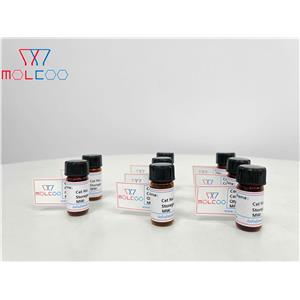
The Molcoo Laboratory added drug impurity reference standards, including Baricitinib, Piperazine, Benzylpenicillin, Tranilast and multiple N-Nitroso drug impurities! Now available for immediate delivery!



 China
China