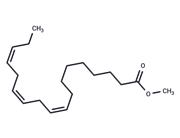
| Name | Osimertinib |
| Description | Osimertinib (AZD-9291) is an EGFR third-generation inhibitor that inhibits the T790M resistance mutation produced by second-generation EGFR inhibitors with irreversible and oral activity. Osimertinib has antitumor activity for the treatment of EGFR-mutated non-small-cell lung cancer. |
| Cell Research | AZD-9291 is dissolved in DMSO and stored, and then diluted with appropriate medium before use[1]. PC-9 cells are seeded into T75 flasks (5×10⁵ cells/flask) in RPMI growth media and incubated at 37°C, 5% CO2. The following day the media is replaced with media supplemented with a concentration of EGFR inhibitor equal to the EC50 concentration predetermined in PC-9 cells. Media changes are carried out every 2-3 days and resistant clones allowed to grow to 80% confluency prior to the cells being trypsinised and reseeded at the original seeding density in media containing twice the concentration of EGFR inhibitor. Dose escalations are continued until a final concentration of 1.5 μM Gefitinib, 1.5 μM Afatinib, 1.5 μM WZ4002 or 160 nM AZD-9291 are achieved[1]. |
| Kinase Assay | ACY-1215 is dissolved and subsequently diluted in assay buffer [50 mM HEPES, pH 7.4, 100 mM KCl, 0.001% Tween-20, 0.05% BSA, and 20 μM tris(2-carboxyethyl)phosphine] to 6-fold the final concentration. HDAC enzymes are diluted to 1.5-fold of the final concentration in assay buffer and pre-incubated with ACY-1215 for 10 minutes before the addition of the substrate. The amount of FTS (HDAC1, HDAC2, HDAC3, and HDAC6) or MAZ-1675 (HDAC4, HDAC5, HDAC7, HDAC8, and HDAC9) used for each enzyme is equal to the Michaelis constant (Km), as determined by a titration curve. FTS or MAZ-1675 is diluted in assay buffer to 6-fold the final concentration with 0.3 μM sequencing grade trypsin. The substrate/trypsin mix is added to the enzyme/compound mix and the plate is shaken for 60 seconds and then placed into a SpectraMax M5 microtiter plate reader. The enzymatic reaction is monitored for release of 7-amino-4-methoxy-coumarin over 30 minutes, after deacetylation of the lysine side chain in the peptide substrate, and the linear rate of the reaction is calculated[1]. |
| In vitro | In the EGFRm+ (PC9) and EGFRm+/T790M (H1975) tumor models, oral administration of AZD9291 (5 mg/kg) effectively inhibits AKT and ERK signaling pathways as well as EGFR phosphorylation in tumors, leading to tumor regression. |
| In vivo | In mutant EGFR cell lines, AZD9291 effectively inhibits cell proliferation. |
| Storage | Powder: -20°C for 3 years | In solvent: -80°C for 1 year
Shipping with blue ice/Shipping at ambient temperature. |
| Solubility Information | Ethanol : 22 mg/mL (44.03 mM), Sonication is recommended.
DMSO : 120 mg/mL (240.19 mM), Sonication is recommended.
10% DMSO+40% PEG300+5% Tween 80+45% Saline : 9.2 mg/mL (18.41 mM), Suspension.
H2O : < 1 mg/mL (insoluble or slightly soluble)
|
| Keywords | tumor xenograft model | PC-9 | Osimertinib | Inhibitor | inhibit | HER1 | H1975 | ErbB-1 | Epidermal growth factor receptor | EGFR (L858R/T790M) | EGFR (Exon 19 deletion) | EGFR | cancer | Ba/F3 cells | AZD9291 | AZD 9291 |
| Inhibitors Related | (S)-Afatinib | Lidocaine Hydrochloride hydrate | Lapatinib | Afatinib Dimaleate | Erlotinib hydrochloride | Erlotinib | Neratinib | Afatinib | Chalcone | Brigatinib | Genistein | Gefitinib |
| Related Compound Libraries | Bioactive Compound Library | EMA Approved Drug Library | Tyrosine Kinase Inhibitor Library | Kinase Inhibitor Library | Anti-Cancer Clinical Compound Library | Drug Repurposing Compound Library | Inhibitor Library | FDA-Approved Drug Library | Anti-Cancer Approved Drug Library | Immunology/Inflammation Compound Library | Anti-Cancer Drug Library | Anti-Cancer Active Compound Library |



 United States