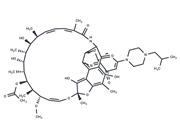
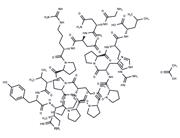
| Name | Oxfendazole |
| Description | Oxfendazole (RS-8858), a broad spectrum benzimidazole anthelmintic, protects livestock against roundworm, strongyles and pinworms. |
| In vivo | Oxfendazole (OX) induces not only mRNA expression of phase I enzymes Cyp1a1, Cyp1a2, but also Nrf2-regulated phase II enzymes such as Gpx2, Nqo1, Yc2, Akr7a3 and Gstm1 in rats, presumably due to an adaptive response against OX-induced oxidative stress. Oxfendazole enhances oxidative DNA damage (as assessed by 8-hydroxydeoxyguanosine; 8-OHdG) and lipid peroxidation (as assessed by thiobarbituric acid-reactive substances; TBARS) in rats. [1] Oxfendazole administered at the therapeutic dose (4.5 mg/kg) and at the highest dose (22.5 mg/kg) increase 1.54- and 2.36-fold the total liver microsomal cytochrome P450 and more particularly the isoenzyme P450IA2 (95% and 184% increases) in rabbit liver. [2] Oxfendazole MRL induces a mutagenic effect in all tested cell types. Oxfendazole exhibits embryotoxicity including teratogenicity. Oxfendazole induces a disturbance in the different biochemical contents of all tested tissues in mice. [3] Oxfendazole increases the incidence and multiplicity of altered foci (4.0- and 3.6-fold, respectively) and hepatocellular adenomas (HCAs) (3.0- and 5.5-fold, respectively). Oxfendazole treatment induces 5.2- and 5.6-fold increases in the number of proliferating cell nuclear antigen (PCNA)-positive cells and single-stranded DNA (ssDNA)-positive cells in HCAs compared with the surrounding tissue, respectively. [4] Oxfendazole and its sulphone metabolite attain a significantly higher plasma concentration and remain much longer in plasma compared with fenbendazole (FBZ) and albendazole (ABZ) and their respective metabolites in dogs. [5] |
| Storage | Powder: -20°C for 3 years | In solvent: -80°C for 1 year | Shipping with blue ice. |
| Solubility Information | Ethanol : < 1 mg/mL (insoluble or slightly soluble)
DMSO : 28.7 mg/mL (91.01 mM), Sonication is recommended.
H2O : < 1 mg/mL (insoluble or slightly soluble)
|
| Keywords | Tubulin chain | RS8858 | RS 8858 | Parasite | Oxfendazole | MicrotubuleAssociated | Microtubule Associated | Inhibitor | inhibit | Glucose uptake inhibitor |
| Inhibitors Related | Picaridin | Kaempferol | Kojic acid | Urethane | Hydroxychloroquine | Metronidazole | Nitazoxanide | Doxycycline | Chloroquine phosphate | Diethyltoluamide | Artemisinin | DL-Methionine |
| Related Compound Libraries | Ferroptosis Compound Library | FDA-Approved & Pharmacopeia Drug Library | Anti-Parasitic Compound Library | Failed Clinical Trials Compound Library | Bioactive Compound Library | Kinase Inhibitor Library | Anti-Cancer Metabolism Compound Library | Drug Repurposing Compound Library | Microtubule-Targeted Compound Library | Orally Active Compound Library | Bioactive Compounds Library Max | Cytoskeletal Signaling Pathway Compound Library |



 United States