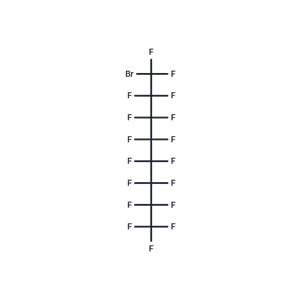
| Name | Perflubron |
| Description | Perflubron (Perfluorooctyl bromide) can be emulsified with egg phospholipids (EYP) and displays exceptionally fast excretion characteristics. Perflubron(1-Bromoheptadecafluorooctane; Heptadecafluorooctyl bromide; Perfluorooctyl bromide) is a contrast medium for magnetic resonance imaging and sonography. |
| Animal Research | I. Magnetic Resonance Imaging (MRI) Application
1. Material Preparation:
1) Perflubron Emulsion: Perflubron is mixed with phosphatidylcholine (EYP) to form a stable emulsion. The concentration of Perflubron in the emulsion is usually 10%-40%.
2) Phosphatidylcholine (EYP): A lipid used to emulsify Perflubron, enhancing its solubility and stability in the aqueous phase.
3) MRI Equipment: Magnetic resonance imaging equipment equipped with high-resolution imaging capabilities.
2. Steps:
1) Preparation: Perflubron is mixed with EYP in a sterile environment to form a stable emulsion, and the concentration is adjusted according to imaging needs.
2) Injection: The emulsion is administered to the patient by intravenous injection, and an MRI scan is performed after the injection.
3) MRI Imaging: An MRI scan is performed and the distribution of the contrast agent is monitored. Perflubron can enhance tissue contrast, especially when monitoring vascular flow or assessing blood volume.
4) After imaging: Perflubron is usually excreted quickly through the lungs, which helps reduce the patient's exposure to contrast agents.
2. Ultrasound examination application
1. Material preparation:
1) Perflubron emulsion: As with magnetic resonance imaging, Perflubron emulsion is emulsified with lecithin to form a microbubble solution suitable for ultrasound imaging.
2) Ultrasound equipment: High-frequency ultrasound equipment that can detect microbubble signals.
2. Steps:
1) Preparation and injection: Prepare Perflubron microbubble emulsion and perform ultrasound examination after intravenous injection.
2) Imaging: Use ultrasound equipment to image blood vessels and tissue structures. Perflubron microbubbles can significantly improve the clarity of blood vessels and tissue boundaries.
3) After imaging: Microbubbles are usually excreted through the lungs, providing a fast, non-invasive imaging method.
Precautions:
1) Dosage: The dose should be reasonably selected according to the imaging procedure and the specific situation of the patient to avoid excessive doses that lead to unnecessary exposure.
2) Patient safety: As with all contrast agents, there is a risk of allergic reactions. Patients should be monitored during and after the injection to detect adverse reactions.
3) Excretion monitoring: Although Perflubron is excreted rapidly, its excretion through the lungs must be monitored to avoid respiratory problems. |
| Storage | keep away from direct sunlight | Powder: -20°C for 3 years | In solvent: -80°C for 1 year | Shipping with blue ice/Shipping at ambient temperature. |
| Solubility Information | 10% DMSO+40% PEG300+5% Tween-80+45% Saline : 1.67 mg/mL (3.35 mM), Sonication is recommended.
DMSO : 50 mg/mL (100.21 mM), Sonication is recommended.
|
| Keywords | sonography | Perfluorooctyl Bromide | Perfluorooctyl | Perflubron | magnetic resonance | Inhibitor | inhibit | contrast medium |
| Inhibitors Related | Myrcene | Undecane | Sodium propionate | Ethyl palmitate | Kojic acid | Uridine | Fumaric acid | 1,4-Naphthoquinone | Glucosamine | Ethyl linoleate | N,N-Dimethylacetamide | Magnesium sulfate |
| Related Compound Libraries | NF-κB Signaling Compound Library | Bioactive Compound Library | Pediatric Drug Library | ReFRAME Related Library | NO PAINS Compound Library | Anti-Cancer Approved Drug Library | Orally Active Compound Library | Immunology/Inflammation Compound Library | Bioactive Compounds Library Max | Anti-Cancer Compound Library | Anti-Cancer Drug Library | Transcription Factor-Targeted Compound Library |


 United States