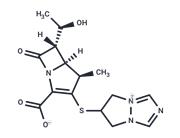
| Name | Pirfenidone |
| Description | Pirfenidone (AMR69) inhibits the production of CCL2 and CCL12 in fibroblasts and also decreases TGF-β2 protein levels. Pirfenidone is an antifibrotic agent that is commonly used in studies related to pulmonary fibrosis and also has anti-inflammatory activity. |
| Cell Research | Pirfenidone (PFD) is dissolved in DMSO and stored, and then diluted with appropriate media before use[3]. HLECs are seeded in 96-well plates (1×10⁴ cells/well) for 24 hours in α-MEM/10% FBS/1%NEAA, and are cultured in stationary tubes in serum-free medium for 24 hours. And then the culture medium is removed and cells are bathed in α-MEM with 10% FBS and 1% NEAA supplemented with 0, 0.01, 0.1, 0.2, 0.3, 0.5, or 1 mg/mL Pirfenidone for 0, 4, 12, 24, 48, or 72 hours. After incubation with 180 μL α-MEM and 20 μL of 5 mg/mL MTT for 4 hours at 37°C, the MTT solution is discarded. The Formosan precipitates are dissolved in 180 μL DMSO by agitating the dishes for 10 minutes at 200 rpm on an orbital shaker. The absorbance at 490 nm in each well is read with a micro plate reader. We further examined the effects of PFD by refining the concentrations at 0.2, 0.25, 0.3, 0.4, 0.5 and 0.6 mg/mL using the MTT assay[3]. |
| In vitro | METHODS: Mouse macrophage-like cell line RAW264.7 was treated with lipopolysaccharide (1 µg/mL) and Pirfenidone (30-300 µg/mL) for 8 h. TNF-α was detected by ELISA assay.
RESULTS: Exposure of RAW264.7 cells to Pirfenidone significantly inhibited cell-associated and secreted TNF-α levels. [1]
METHODS: Three stromal cell lines from control lungs and three cell lines derived from idiopathic pulmonary fibrosis (IPF) were treated with Pirfenidone (0.1-1 mM) for 6 days and cell viability was measured by MTT assay.
RESULTS: Pirfenidone inhibited cell proliferation in a dose-dependent manner. on day 6 of 1 mM Pirfenidone treatment, proliferation was reduced to 47% for control cells and 42% for IPF cells. [2] |
| In vivo | METHODS: To examine the effect of Pirfenidone on pulmonary fibrosis, Pirfenidone (30-100 mg/kg, 0.5% carboxymethylcellulose) was administered orally three times a day for 42 days to ICR mice with bleomycin-induced pulmonary fibrosis.
RESULTS: Pirfenidone inhibited pulmonary inflammatory edema and significantly suppressed pulmonary fibrosis. During the development of bleomycin-induced pulmonary fibrosis in mice, Pirfenidone exerted its antifibrotic effects by regulating the levels of lung IFN-γ, bFGF and TGF-β1. [3] |
| Storage | Shipping with blue ice/Shipping at ambient temperature. |
| Solubility Information | DMSO : 237.5 mg/mL (1282.26 mM), Sonication is recommended.
5% DMSO+95% Saline : 1.86 mg/mL (10.04 mM), Solution.
H2O : 25 mg/mL (134.97 mM), Sonication is recommended.
|
| Keywords | Transforming growth factor beta | TGFβ2 | TGF-β/Smad | TGFβ | TGF-beta/Smad | TGFbeta/Smad | TGF-beta | TGFbeta | TGF-b/Smad | TGFb | Smad | S7701 | S 7701 | Pirfenidone | Inhibitor | inhibit | CCR | CC chemokine receptor | AMR-69 | AMR 69 |
| Inhibitors Related | Trimethylamine N-oxide | Melamine | SB-431542 | Fusaric acid | Hydrochlorothiazide | Hippuric acid | Chromenone 1 | A 83-01 | Suberic acid | Cetrimonium bromide | Galunisertib | Alantolactone |
| Related Compound Libraries | Bioactive Compound Library | Membrane Protein-targeted Compound Library | Anti-Viral Compound Library | Drug Repurposing Compound Library | Anti-Cancer Approved Drug Library | FDA-Approved Drug Library | Immunology/Inflammation Compound Library | Bioactive Compounds Library Max | GPCR Compound Library | Anti-Cancer Active Compound Library | TGF-beta/Smad Compound Library | Anti-Cancer Drug Library |



 United States