Items | Specifications | Results |
Appearance | White Powder | Conforms |
Identification | Maximum absorption occurs at a wavelength of 266±2nm; There is minimum absorption at the wavelength of 228±2nm | λmax=266nm λmin=229nm |
Add the solution ofethidium bromide in its aqueous solution, observing at 254nm wavelength, fluorescence enhanced obviously | Conforms |
PH | 7.0~9.0 | 8.4 |
Loss on drying | ≤10% | 5.7% |
Transmittance of solution | ≥98.0% | 99.3% |
Hyperchromic Effect | ≥55.0% | 58.6% |
Settlement coefficient | ≥4s | >4s |
Contents | 45.0%~55.0% | 50.0% |
Bacterial Endotoxins | ≤5EU/mg | Conforms |
Conclusion | The product conforms to the above specifications. |
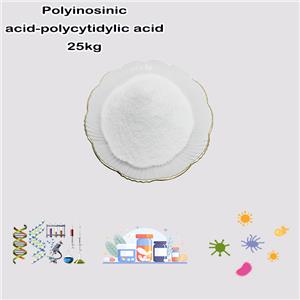
Polyinosinic acid-polycytidylic acid, commonly abbreviated as Poly(I:C), is a synthetic double-stranded RNA (dsRNA) molecule composed of two complementary homopolymers:
Polyinosinic acid (poly(I)) – a polymer of inosine
Polycytidylic acid (poly(C)) – a polymer of cytidine
These strands form a stable double-helix structure through Watson–Crick base pairing (I:C pairs), mimicking viral dsRNA — a molecular pattern typically produced during viral replication.
🔬 Key Biological Properties
TLR3 agonist: Binds to Toll-like receptor 3 (TLR3) on immune cells (e.g., dendritic cells, macrophages).
RIG-I/MDA5 activator: Also recognized by cytosolic RNA sensors RIG-I and MDA5, triggering antiviral signaling.
Potent inducer of type I interferons (IFN-α/β) and pro-inflammatory cytokines (e.g., IL-6, TNF-α, IL-12).
Activates multiple immune pathways: NF-κB, IRF3, MAPK, etc.
💊 Major Uses & Applications
1. Immunostimulant & Vaccine Adjuvant
Enhances both innate and adaptive immunity.
Used in experimental vaccines (e.g., cancer vaccines, antiviral vaccines) to boost immune response.
Promotes dendritic cell maturation and cross-presentation of antigens.
2. Antiviral Agent
Mimics viral infection, inducing an antiviral state in cells via interferon production.
Historically studied for treating herpes zoster (shingles), including ocular herpes zoster — clinical studies show it accelerates healing when combined with antivirals like ganciclovir.
3. Antitumor / Cancer Immunotherapy
Directly induces apoptosis in some cancer cells.
Stimulates immune-mediated tumor clearance.
Investigated in combination with CAR-T therapy, checkpoint inhibitors, or other immunotherapies.
Protects dendritic cells from tumor-derived immunosuppressive factors (e.g., via upregulation of A20 protein).
4. Research Tool
Widely used in vitro and in vivo to:
Model viral infection without live virus.
Study TLR3 signaling, interferon responses, and inflammation.
Induce experimental models of neuroinflammation, maternal immune activation (MIA) in autism research, or asthma exacerbation.
5. Therapeutic Formulations
Available as sodium salt (Poly(I:C) sodium).
Used clinically in some countries as an injectable immunomodulator (e.g., in China and Japan under names like "PolyI:C" ).
⚠️ Considerations
Can cause systemic inflammation or cytokine storm at high doses.
Stability depends on molecular weight, formulation (e.g., complexed with carboxymethylcellulose or poly-L-lysine for enhanced stability).
Requires careful handling: store at –20°C under inert atmosphere; hygroscopic.
📌 Summary
Poly(I:C) is a synthetic dsRNA analog that powerfully activates antiviral and inflammatory immune responses. Its primary uses span vaccine adjuvancy, antiviral therapy, cancer immunotherapy, and biomedical research as a mimic of viral infection.
Let me know if you'd like details on dosing, specific disease models, or commercial product info!


 China
China