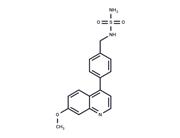
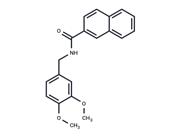
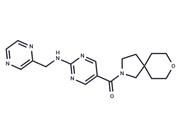
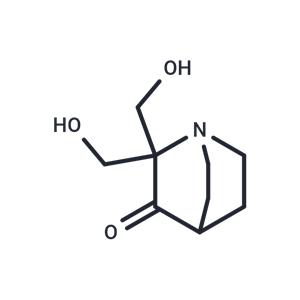
| Name | PRIMA-1 |
| Description | PRIMA-1 (NSC-281668) is a mutant p53 reactivator that induces apoptosis and inhibits the growth of human tumors with mutant p53. |
| Cell Research | Cells are kept at a temperature of 37 °C, a minimum relative humidity of 95 %, and an atmosphere of 5 % CO2 in air. Cell viability is measured by MTT assay after treatment with PRIMA-1. Briefly, cells are seeded in each well of 96-well plates in 100 μl culture medium and incubated overnight at 37 °C in an atmosphere of 5 % CO2. The next day, the medium is removed and cells washed with PBS and treated with vehicle control(DMSO, dimethylsulfoxide) or different concentrations of PRIMA-1 for 12 to 48 h; the medium is replaced with MTT solution diluted in medium once the treatment is completed. The plates are further incubated at 37 °C under 5 % CO2 for 4 h and then left at room temperature until completely dry. DMSO was then added and the absorbance is read at 492 nm using a microplate enzyme-linked immunoassay reader (ELISA). The relative growth activity is determined as the percentage absorbance of treated cells compared to that of vehicle treated cells (control).(Only for Reference) |
| In vitro | PRIMA-1 is converted to compounds that form adducts with thiols in mutant p53. Modification of thiol groups in mutant p53 by PRIMA-1 conversion products is sufficient to restore its tumor suppressor activity.[2]. PRIMA-1 inhibits the growth of pancreatic cancer cell lines and induces cell cycle arrest and decreases DNA synthesis. It selectively induces apoptosis and cell death in mutant p53-expressing pancreatic cancer cells and also leads to activation of p53-dependent apoptotic pathways. PRIMA-1 enhances the cytotoxicity of chemotherapeutic agents active against mutant p53 pancreatic cancer cells[1]. PRIMA-1 has antileukemic properties in acute promyelocytic leukemia-derived NB4 cells. PRIMA-1-triggered apoptosis is in a dose-dependent and time-dependent manner as indicated by the MTT assay and annexin-V staining. Apoptosis induction by PRIMA-1 is associated with caspase-9, caspase-7 activation and PARP cleavage. PRIMA-1 does not show any significant apoptotic effect in normal human peripheral blood mononuclear cells[4]. |
| In vivo | Intravenous (i.v.) injections of PRIMA-1 in mice does not cause any obvious changes in weight or behavior compared with untreated animals. PRIMA-1 has in vivo antitumor activity in this animal tumor model. It suppresses in vivo tumor growth in a mutant p53-dependent manner[3]. |
| Storage | Powder: -20°C for 3 years | In solvent: -80°C for 1 year | Shipping with blue ice/Shipping at ambient temperature. |
| Solubility Information | 10% DMSO+40% PEG300+5% Tween 80+45% Saline : 2 mg/mL (10.8 mM), Sonication is recommended.
Ethanol : 35 mg/mL (188.96 mM), Sonication is recommended.
H2O : 18.5 mg/mL (99.88 mM), Sonication is recommended.
DMSO : 50 mg/mL (269.95 mM), Sonication is recommended.
|
| Keywords | SUM149 | PRIMA-1 | PRIMA1 | PANC-1 | Panc02 | NSC281668 | NSC 281668 | MDM-2/p53 | MDA-MB-231 | Ishikawa | Inhibitor | inhibit | HEC-1-B | Ferroptosis | Autophagy | Apoptosis | AN 3CA |
| Inhibitors Related | Stavudine | Aceglutamide | Hemin | Tamoxifen | Urea | Guanidine hydrochloride | Hydroxychloroquine | Metronidazole | Formamide | Paeonol | Naringin | Alginic acid |
| Related Compound Libraries | Anti-Colorectal Cancer Compound Library | Apoptosis Compound Library | Anti-Lung Cancer Compound Library | Bioactive Compound Library | Ubiquitination Compound Library | ReFRAME Related Library | Anti-Cancer Metabolism Compound Library | Inhibitor Library | PPI Inhibitor Library | Anti-Aging Compound Library | Bioactive Compounds Library Max | Anti-Cancer Active Compound Library |


 United States