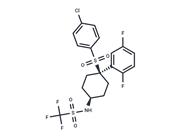
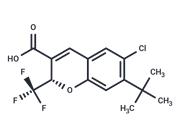
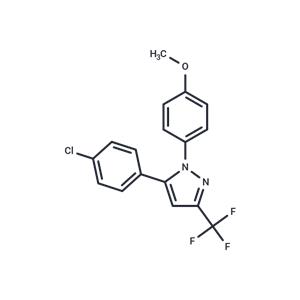
| Name | SC-560 |
| Description | SC-560 is a member of the diaryl heterocycle class of cyclooxygenase (COX) inhibitors. |
| Cell Research | SC-560 is dissolved in DMSO[2].HuH-6 and HA22T/VGH cells (5000/well) are treated with various concentrations of SC-560 (5, 10, 25, 50, 100, 200 μM) and cultured for 72 h. At the end of treatment, cell viability is assessed by MTS assay. |
| Kinase Assay | Test compound is incubated with human whole blood stimulated with bacterial LPS for 4 h, followed by capture of MPO on immobilized anti-MPO antibody coated plates. The captured MPO is washed and residual MPO activity is determined using Amplex Red and H2O2. |
| Animal Research | Rat: The pharmacokinetics of SC-560 is studied in Sprague-Dawley rats after a single intravenous (i.v.) and oral dose (10 mg/kg) in polyethylene glycol (PEG) 600 and a single oral dose (10 mg/kg) in 1% methylcellulose (MC). Serial blood samples are collected via a catheter inserted in the right jugular vein and serum samples are analysed for SC-560 using reverse phase HPLC. After oral administration of SC-560 in PEG, urine is also collected for 24 h and analyzed for urinary sodium, chloride, and potassium as well as NAG. |
| In vitro | Preincubation of cyclooxygenase-1 (COX-1) with SC-560 selectively inhibits the conversion of arachidonic acid to prostaglandin E2 (PGE2) in a concentration-dependent manner, demonstrating higher specificity for COX-1 over COX-2, as indicated by SC-560's inhibitory concentration 50 (IC50) for COX-2 being 6.3 μM, nearly 1,000-fold greater than for COX-1. Furthermore, SC-560 has been shown to suppress hepatocellular carcinoma (HCC) cell growth, colony formation in soft agar, and induce apoptosis in a dose- and time-dependent manner. Additionally, it downregulates anti-apoptotic proteins, including survivin and X-linked inhibitor of apoptosis protein (XIAP), while simultaneously activating caspases 3 and 7, illustrating its therapeutic potential in HCC treatment through multifaceted mechanisms of action. |
| In vivo | Oral dosing with either 10 or 30 mg/kg SC-560 1 hour before assay completely inhibits ionophore-stimulated TxB2 production, indicating that SC-560 is orally bioavailable and inhibits COX-1 in vivo. SC-560 extensively distributes into rat tissues, with a CL approaching hepatic plasma flow. However, after oral administration, it exhibits low (<15%), formulation-dependent bioavailability and demonstrates kidney toxicity. |
| Storage | Shipping with blue ice/Shipping at ambient temperature. |
| Solubility Information | 10% DMSO+40% PEG300+5% Tween 80+45% Saline : 2.5 mg/mL (7.09 mM), Sonication is recommended.
DMSO : 35.3 mg/mL (100.07 mM), Sonication is recommended.
|
| Keywords | SC-560 | SC 560 | Inhibitor | inhibit | Cyclooxygenase | COX-2 | COX-1 | COX |
| Inhibitors Related | Naproxen sodium | Acetaminophen | Phenidone | 4-Aminosalicylic acid | Gallic Acid Monohydrate | Diclofenac Potassium | Indomethacin | Paradol | Trometamol | 5-Methylfurfural | Phenylbutazone | Magnesium sulfate |
| Related Compound Libraries | Highly Selective Inhibitor Library | Nonsteroidal Anti-Inflammatory Compound Library | Pain-Related Compound Library | Bioactive Compound Library | Neuronal Signaling Compound Library | HIF-1 Signaling Pathway Compound Library | Inhibitor Library | NO PAINS Compound Library | Anti-Prostate Cancer Compound Library | Anti-Aging Compound Library | Immunology/Inflammation Compound Library | Bioactive Compounds Library Max |


 United States