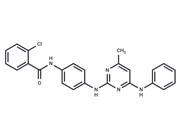
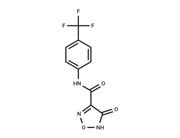
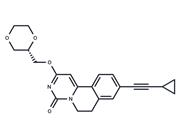
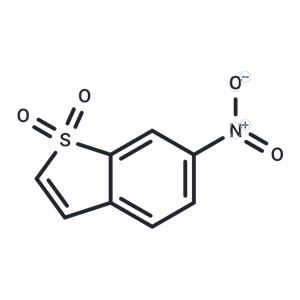
| Name | Stattic |
| Description | Stattic (STAT3 Inhibitor V) is a STAT3 inhibitor (IC50=5.1 μM) that selectively inhibits STAT3 activation, dimerization, and nuclear translocation. Stattic has antitumor activity and induces apoptosis. |
| Cell Research | MDA-MB-231, MDA-MB-435S, and MDA-MB-453 cells were seeded. at 5 × 10^4 cells in 6-well plates, grown for 24 hr before adding DMSO or Stattic (final DMSO concentration 0.1%) and then incubated with the inhibitor for 24 hr. All cells were collected and resuspended in buffer (0.1% sodium citrate, 0.1% Triton X-100, 20 μM propidium iodide) and incubated for 3 hr before 10^4 cells per sample were analyzed by flow cytometry with a FACSCalibur equipped with a 488 nm laser [1]. |
| Kinase Assay | The screening was performed at approximately 30C. The specificity of screening hits was validated in analogous assays for binding of the test compounds to the SH2 domains of STAT1, STAT5, and Lck. The final concentration of buffer components used for all FP assays was 10 mM HEPES (pH 7.5), 1 mM EDTA, 0.1% Nonidet P-40, 50 mM NaCl, and 10% DMSO. The absence of dithiothreitol is essential for inhibitory activity. The sequences of the peptides were: STAT3, 5-carboxyfluorescein-GY(PO3H2)LPQTV-NH2; STAT1, 5-carboxyfluorescein-GY(PO3H2)DKPHVL; STAT5, 5-carboxyfluorescein-GY (PO3H2)LVLDKW; and Lck, 5-carboxyfluorescein-GY(PO3H2)EEIP. Peptides were >95% pure. For specificity analysis at 30°C, proteins were used at 150 nM (STAT1, STAT3, and STAT5). For specificity analysis at 37°C, proteins were used at 370 nM (STAT3) or 100 nM (Lck). Proteins were incubated with test compounds in tubes at the indicated temperatures for 60 min prior addition of the respective 5-carboxyfluorescein labeled peptides (final concentration: 10 nM). Analysis of c-Myc/Max and Jun/Jun dimerization and DNA binding at 37°C was performed as described but in the absence of DTT. Before measurement at room temperature, the mixtures were allowed to equilibrate for at least 30 min. Test compounds were used at the indicated concentrations diluted from 20× stock in DMSO. Binding curves and inhibition curves were fitted with SigmaPlot. All competition curves were repeated three times in independent experiments. For the analysis of time dependence of the inhibition, the components were mixed from stock solutions kept at 0C and then incubated at 37C. Aliquots were taken at the indicated time points [1]. |
| In vitro | METHODS: Human pancreatic cancer cells PANC-1 and BxPc-3 were treated with Stattic (1-10 μM) for 12-48 h. Cell viability was measured using the CCK-8.
RESULTS: Stattic decreased the proliferation of PANC-1 and BxPc-3 cells in a concentration- and time-dependent manner, and the IC50s of Stattic on BxPc-3 and PANC-1 cells were 3.135-5.296 μM and 3.835-4.165 μM, respectively, after treatment with Stattic for 24 h. [1]
METHODS: Human hepatocellular carcinoma cells HepG2 were treated with Stattic (5-20 μM) for 1 h, followed by stimulation with IL-6 or IFN-γ, and the expression levels of target proteins were detected by Western Blot.
RESULTS: Pre-incubation with Stattic resulted in a selective decrease in the phosphorylation of STAT3 Tyr705, while the activation of STAT1 Tyr701 remained unchanged. [2] |
| In vivo | METHODS: To test the antitumor activity in vivo, Stattic (10 mg/kg) was administered intraperitoneally once daily for four weeks to BALB/c nude mice harboring human pancreatic adenocarcinoma tumor PANC-1.
RESULTS: Stattic inhibited PC growth in a nude mouse tumor model by inactivating STAT3. [1]
METHODS: To investigate the role in acute liver injury, Stattic (5 mg/kg in DMSO:olive oil = 1:19) was administered as a single intraperitoneal injection to BALB/c mice with LPS/d-GalN induced acute liver injury.
RESULTS: Stattic was protective against LPS/d-GalN-induced liver injury, and its protective effect may be related to its anti-inflammatory and anti-apoptotic effects. [3] |
| Storage | Powder: -20°C for 3 years | In solvent: -80°C for 1 year
Shipping with blue ice/Shipping at ambient temperature. |
| Solubility Information | Ethanol : 1.1 mg/mL (5.21 mM), Sonication is recommended.
10% DMSO+40% PEG300+5% Tween 80+45% Saline : 1.06 mg/mL (5.02 mM), Solution.
DMSO : 260 mg/mL (1231.12 mM), Sonication is recommended.
|
| Keywords | Y705 | syndrome | Stattic | STAT3 | STAT | SH2 | S727 | S phase | p-STAT3 | prostate | P-ERK1/2 | PC3M-1E8 | Inhibitor | inhibit | cancer | Apoptosis | Alport |
| Inhibitors Related | Stavudine | Aceglutamide | Urea | Tamoxifen | Cysteamine hydrochloride | Metronidazole | Citric Acid Triammonium | Formamide | Dimethyl phthalate | Alginic acid | Sodium Molybdate | Sildenafil citrate |
| Related Compound Libraries | Highly Selective Inhibitor Library | Reprogramming Compound Library | Anti-Pancreatic Cancer Compound Library | Bioactive Compound Library | Inhibitor Library | Immunology/Inflammation Compound Library | Anti-Aging Compound Library | Bioactive Compounds Library Max | Anti-Cancer Compound Library | Anti-Liver Cancer Compound Library | Human Metabolite Library | Transcription Factor-Targeted Compound Library |


 United States