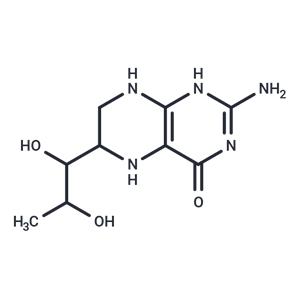
| Name | Tetrahydrobiopterin |
| Description | Tetrahydrobiopterin (BH4) is a cofactor for aromatic amino acid hydroxylases and an essential cofactor for nitric oxide synthase (NOS), which is used in the study of endothelial dysfunction such as hypertension, hypercholesterolemia, and diabetes. |
| In vitro | Microglia cultures under hyperoxic conditions were supplemented with or without Tetrahydrobiopterin (100 μM). Exposure of microglia to hyperoxia-induced oxidative stress for 24 h showed a significant increase in TSP-1 mRNA expression and protein compared with normoxia (21% O2). Tetrahydrobiopterin supplementation significantly prevents hyperoxia-induced microglial activation and prevents microvascular damage in choroidal explants by reducing Iba-1 and TSP-1 expression.[1] |
| In vivo | To assess the levels of tetrahydrobiopterin in the retina, three to five retinal pools were collected from WT and HPH-1 mice at postnatal ages 7, 14, and 22 years and evaluated by LC-MS/MS. LC-MS/MS analysis confirmed that the concentration level of tetrahydrobiopterin in the retinal tissue of HPH-1 mice was significantly reduced by approximately 90% compared with WT groups P7, P14, and P22, respectively.[1] |
| Storage | Powder: -20°C for 3 years
Shipping with blue ice/Shipping at ambient temperature. |
| Solubility Information | DMSO : 40 mg/mL (165.8 mM), Sonication is recommended.
10% DMSO+40% PEG300+5% Tween 80+45% Saline : 2 mg/mL (8.29 mM), Sonication is recommended.
|
| Keywords | Tetrahydrobiopterin | NOS | Human Endogenous Metabolite | EndogenousMetabolite | Endogenous Metabolite | BH-4 | BH 4 |
| Inhibitors Related | Sucrose | Aceglutamide | Nicotinamide riboside malate | DL-Lysine | D(+)-Raffinose pentahydrate | Guanidine hydrochloride | Malic acid | Formamide | Glycerol | Thymidine | Corn starch | Gluconate Calcium |
| Related Compound Libraries | Rare Natural Product Library |


 United States